

Introduction
Ultrasound technicians play an essential role in modern healthcare by helping doctors diagnose medical conditions using advanced imaging equipment. As demand for medical imaging continues to grow, many people are considering this profession because of its strong job outlook, competitive pay, and relatively short education path.
If you’re wondering about the ultrasound tech salary, this guide covers average earnings, factors that affect pay, career growth, and ways to increase your income in 2026.
The average ultrasound tech salary in the United States ranges from $80,000 to $95,000 per year, depending on experience, education, certifications, specialty, and location. Professionals working in high-demand states, specialized imaging fields, or travel positions can earn well over $110,000 annually.
What Is an Ultrasound Technician?
An ultrasound technician, also known as a diagnostic medical sonographer, uses high-frequency sound waves to create images of organs, tissues, and developing babies. Physicians use these images to diagnose and monitor many health conditions.
Daily responsibilities include:
- Preparing patients for exams
- Operating ultrasound equipment
- Capturing accurate diagnostic images
- Explaining procedures to patients
- Working closely with physicians
- Maintaining imaging records
The career combines healthcare knowledge with advanced technology, making it an excellent choice for people who enjoy helping others.
Average Ultrasound Tech Salary in 2026
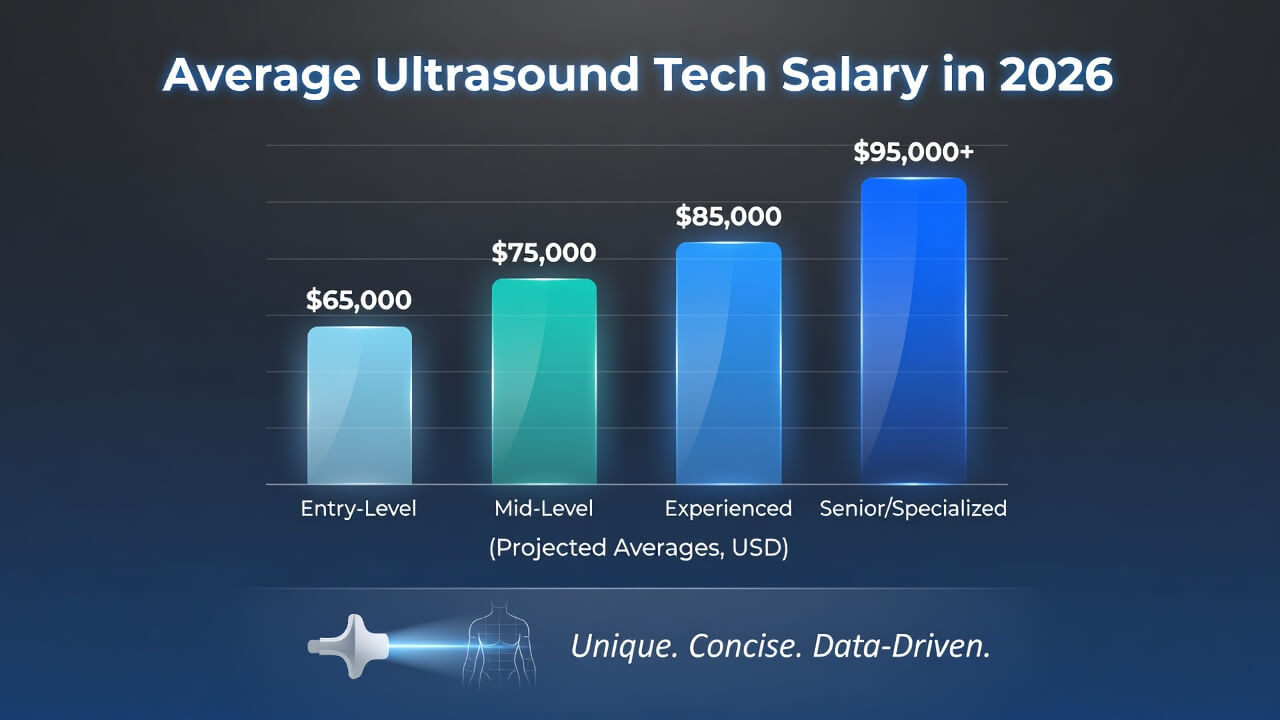
According to the U.S. Bureau of Labor Statistics (BLS), diagnostic medical sonographers earn a median annual wage of approximately $84,000+, with salaries continuing to rise because of increasing healthcare demand.
Typical salary ranges include:
| Experience Level | Average Annual Salary |
|---|---|
| Entry-Level | $60,000–$75,000 |
| Mid-Level | $80,000–$95,000 |
| Experienced | $95,000–$110,000+ |
| Specialized Sonographers | $110,000–$130,000+ |
Many employers also offer:
- Health insurance
- Paid vacation
- Retirement plans
- Tuition reimbursement
- Overtime opportunities
- Shift differentials
These benefits can significantly increase total compensation.
What Factors Affect Ultrasound Tech Salary?
Several factors determine how much an ultrasound technician earns.
1. Experience
Experience is one of the biggest salary factors.
Generally:
- New graduates earn lower starting salaries.
- Five years of experience often leads to significant raises.
- Senior sonographers frequently supervise junior staff and earn more.
Many employers reward experienced professionals because they perform scans more efficiently and accurately.
2. Location
Salary varies greatly by state and city.
Higher-paying locations usually have:
- Higher living costs
- Large hospitals
- Teaching medical centers
- Greater demand for imaging professionals
States such as California, Washington, Oregon, Hawaii, and Massachusetts often offer some of the highest salaries.
3. Workplace
Where you work also matters.
Common employers include:
- Hospitals
- Outpatient imaging centers
- Physician offices
- Emergency clinics
- Women’s health centers
- Diagnostic laboratories
Hospitals often provide better salaries and benefits compared to smaller private clinics.
4. Specialty
Some ultrasound specialties earn more than general sonography.
Examples include:
- Cardiac sonography
- Vascular sonography
- Pediatric sonography
- Musculoskeletal ultrasound
- Neurosonography
Specialized skills often require additional education or certifications, and they frequently result in higher pay.
Highest Paying Ultrasound Specialties
Choosing a specialty is one of the fastest ways to increase earning potential.
Cardiac Sonographer
Cardiac sonographers perform echocardiograms that evaluate heart function.
Average salary:
$95,000–$120,000
Vascular Sonographer
These professionals examine blood vessels and circulation.
Average salary:
$90,000–$115,000
Pediatric Sonographer
Working with infants and children requires additional expertise.
Average salary:
$90,000–$110,000
Travel Ultrasound Tech
Travel sonographers accept temporary assignments across the country.
Average salary:
$110,000–$140,000+
Many travel positions also include:
- Housing stipends
- Travel reimbursement
- Bonus pay
- Tax-free allowances (when applicable)
Salary by Experience
Experience has a direct impact on earnings.
Entry-Level (0–2 Years)
New graduates generally earn:
$60,000–$75,000
Most spend this time developing scanning skills and gaining clinical experience.
Mid-Career (3–7 Years)
Average salary:
$80,000–$95,000
Professionals often receive promotions and additional responsibilities.
Senior Sonographer (8+ Years)
Average salary:
$100,000+
Senior staff may also train new employees or oversee imaging departments.
How to Increase Your Ultrasound Tech Salary

If you want to earn more, consider these strategies.
Earn Additional Certifications
Employers often pay more for certified specialists.
Popular certifications include:
- Abdomen
- OB/GYN
- Vascular Technology
- Adult Echocardiography
Multiple certifications make you more competitive.
Gain Specialized Experience
Learning advanced imaging techniques increases your value to employers.
Highly specialized sonographers are often difficult to replace.
Work Overtime
Many hospitals offer overtime opportunities.
Weekend, evening, and holiday shifts frequently come with higher hourly rates.
Consider Travel Positions
Travel healthcare continues to offer some of the industry’s highest salaries due to staffing shortages.
Continue Your Education
Leadership roles such as imaging supervisor or department manager usually require additional education and experience but come with higher salaries.
Job Outlook for Ultrasound Technicians
The career outlook remains excellent.
According to the U.S. Bureau of Labor Statistics, employment for diagnostic medical sonographers is projected to grow much faster than the average for all occupations over the coming years.
Several factors drive this demand:
- Aging populations
- Increased use of non-invasive imaging
- Growth in outpatient care
- Advances in ultrasound technology
This strong demand means qualified professionals are likely to continue enjoying stable employment opportunities.
Is Becoming an Ultrasound Tech Worth It?
For many people, the answer is yes.
Benefits include:
- Competitive salary
- Strong job security
- Relatively short education requirements
- Opportunities for specialization
- Flexible work environments
- Meaningful patient interaction
Compared with many healthcare careers requiring four or more years of education, sonography offers an attractive balance between training time and earning potential.
Tips for Future Ultrasound Technicians
If you’re planning to enter this profession:
- Choose an accredited sonography program.
- Complete clinical training.
- Earn professional certifications.
- Develop strong communication skills.
- Continue learning throughout your career.
- Consider specializing after gaining experience.
These steps can improve both employment opportunities and long-term salary growth.
Frequently Asked Questions
How much does an ultrasound tech make per year?
Most ultrasound technicians earn between $80,000 and $95,000 annually, although beginners may earn less and experienced specialists can earn well over $110,000.
Which state pays ultrasound technicians the most?
States such as California, Washington, Oregon, and Hawaii are often among the highest-paying locations due to strong demand and higher living costs.
Can ultrasound technicians earn over $100,000?
Yes. Experienced sonographers, specialists, supervisors, and travel ultrasound technicians frequently earn more than $100,000 per year.
Do ultrasound technicians receive benefits?
Most full-time positions include benefits such as health insurance, retirement plans, paid leave, continuing education assistance, and overtime opportunities.
Is ultrasound technology a good career in 2026?
Yes. It offers strong job growth, competitive salaries, career advancement opportunities, and the chance to make a meaningful impact on patient care.
Final Takeaway
An ultrasound tech’s salary remains one of the most attractive in allied healthcare. With average annual earnings around $80,000–$95,000, excellent employment prospects, and multiple opportunities for specialization, this profession offers both financial stability and rewarding work. Whether you’re just starting your healthcare journey or looking for a career change, becoming an ultrasound technician can provide long-term growth, competitive compensation, and the satisfaction of helping patients through accurate diagnostic imaging.