
Introduction
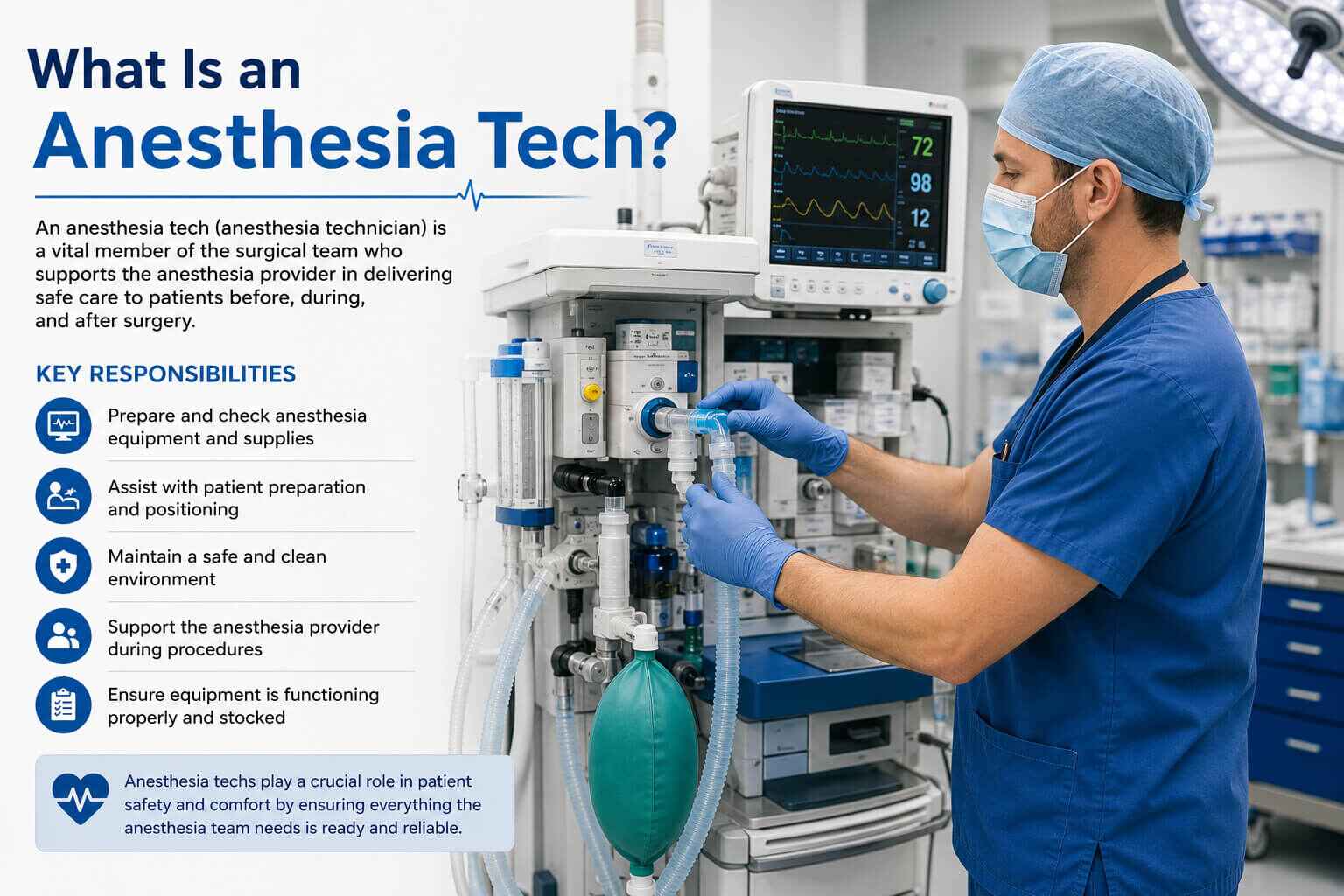
Anesthesia technology is one of the fastest-growing healthcare careers for people who want to work in operating rooms without becoming a doctor or nurse. An anesthesia tech plays a vital role in preparing anesthesia equipment, supporting anesthesiologists, and helping ensure patient safety before, during, and after surgery.
An anesthesia tech is a healthcare professional who prepares, tests, and maintains anesthesia equipment while assisting anesthesiologists during medical procedures. Their work improves patient safety, keeps operating rooms running efficiently, and makes them an essential part of modern surgical teams.
What Is an Anesthesia Tech?
An anesthesia tech (anesthesia technician) is a trained healthcare worker who supports anesthesia providers in hospitals, surgical centers, trauma units, and outpatient clinics.
Their primary responsibility is to prepare everything needed before anesthesia is administered. This includes checking equipment, organizing medications and supplies, monitoring devices, and troubleshooting equipment if problems arise.
Although anesthesia technicians do not administer anesthesia independently, they play an important role in helping anesthesiologists deliver safe patient care.
Without properly functioning equipment and organized supplies, surgeries can be delayed or become less efficient.
What Does an Anesthesia Tech Do?
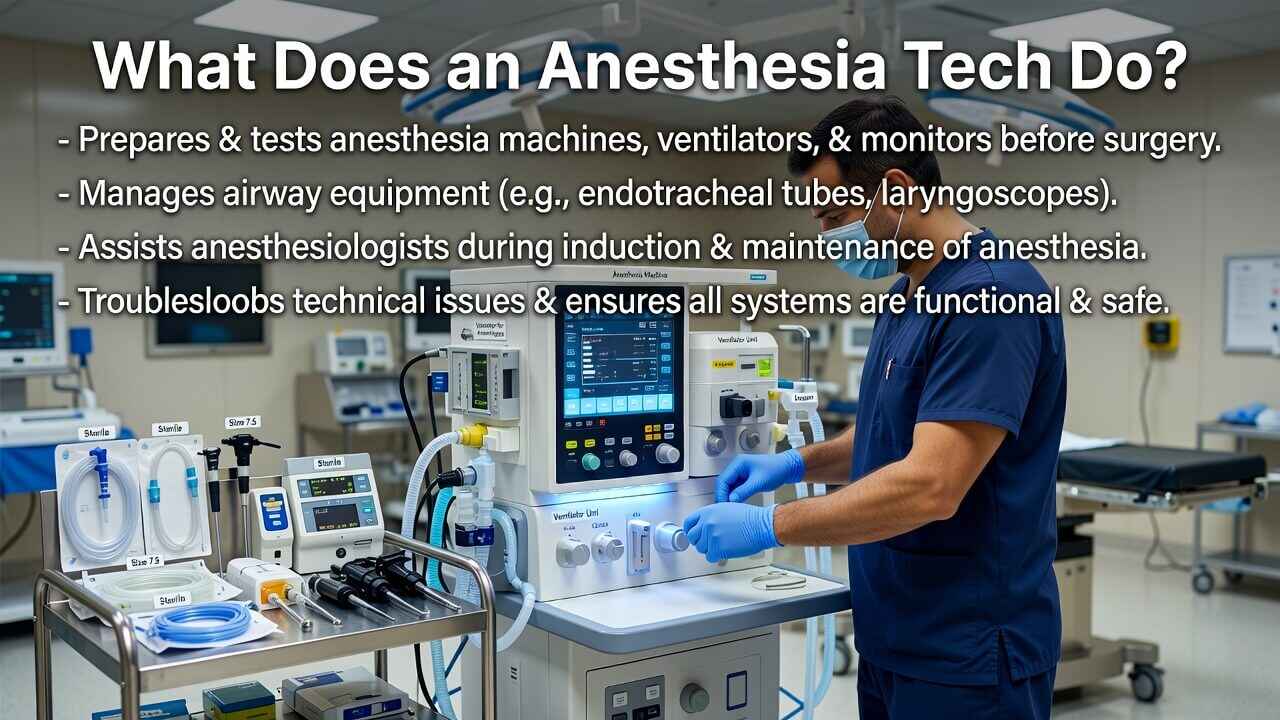
The daily responsibilities of an anesthesia technician vary depending on the healthcare facility and specialty.
Common duties include:
- Preparing anesthesia machines before surgery
- Testing ventilators and monitoring equipment
- Sterilizing anesthesia tools
- Organizing medications and airway devices
- Assisting anesthesiologists during procedures
- Restocking operating rooms
- Maintaining patient monitoring equipment
- Troubleshooting equipment problems
- Recording equipment maintenance
- Helping during emergency procedures
Many anesthesia techs begin preparing operating rooms before the first surgery of the day and continue supporting multiple procedures throughout their shift.
Why Are Anesthesia Techs Important?
Every surgical procedure depends on safe anesthesia care.
Anesthesia technicians help reduce equipment failures, improve workflow, and support patient safety by ensuring that everything is ready before a patient enters the operating room.
Their work allows anesthesiologists to focus on patient assessment and anesthesia management rather than equipment preparation.
In busy hospitals where dozens of surgeries happen daily, this support becomes essential.
Where Do Anesthesia Techs Work?
Anesthesia technicians have opportunities in many healthcare settings.
Common workplaces include:
- Hospitals
- Outpatient surgery centers
- Emergency departments
- Trauma centers
- Labor and delivery units
- Cardiac surgery departments
- Children’s hospitals
- Military healthcare facilities
- Teaching hospitals
Large hospitals often employ several anesthesia technicians because multiple operating rooms run simultaneously.
Skills Every Anesthesia Tech Needs
Success in this career requires both technical knowledge and interpersonal skills.
Important skills include:
Technical Skills
- Equipment troubleshooting
- Medical device operation
- Sterilization procedures
- Patient monitoring knowledge
- Airway equipment preparation
Soft Skills
- Attention to detail
- Communication
- Teamwork
- Time management
- Problem-solving
- Calmness under pressure
A small mistake in equipment preparation can delay surgery, making attention to detail one of the most valuable qualities.
Education Requirements
Most employers require at least:
- High school diploma or equivalent
- Completion of an anesthesia technology training program
- Clinical experience
- Basic Life Support (BLS) certification
Some employers prefer candidates with an associate degree in anesthesia technology or a related healthcare field.
Training programs combine classroom instruction with hands-on clinical practice.
Students typically learn:
- Human anatomy
- Medical terminology
- Pharmacology basics
- Infection control
- Airway management
- Surgical procedures
- Medical equipment operation
Certification for Anesthesia Techs
While certification requirements vary by employer and country, professional certification can improve employment opportunities.
Certification often demonstrates knowledge of:
- Patient safety
- Equipment management
- Infection prevention
- Emergency response
- Professional standards
Many hospitals prefer certified candidates because certification reflects additional training and commitment to the profession.
Anesthesia Tech vs. Anesthesia Assistant
People often confuse these two careers.
| Anesthesia Tech | Anesthesia Assistant |
|---|---|
| Prepares equipment | Helps provide anesthesia care |
| Focuses on equipment | Focuses on patient management |
| Works under anesthesia providers | Works directly with anesthesiologists |
| Technical support role | Advanced clinical role |
An anesthesia assistant generally requires significantly more education and clinical training.
Salary Expectations
Anesthesia technician salaries depend on:
- Country
- Experience
- Certification
- Hospital size
- Geographic location
- Shift schedule
Experienced technicians working in major hospitals often earn more than those in smaller healthcare facilities.
Night shifts, emergency coverage, and specialized surgical departments may also provide additional pay.
Career Growth Opportunities
Many anesthesia technicians continue advancing throughout their careers.
Possible career paths include:
- Senior anesthesia technician
- Lead anesthesia technologist
- Operating room supervisor
- Medical equipment specialist
- Clinical educator
- Surgical Services Coordinator
Some professionals later pursue education to become respiratory therapists, nurses, or anesthesia assistants.
A Typical Day for an Anesthesia Tech
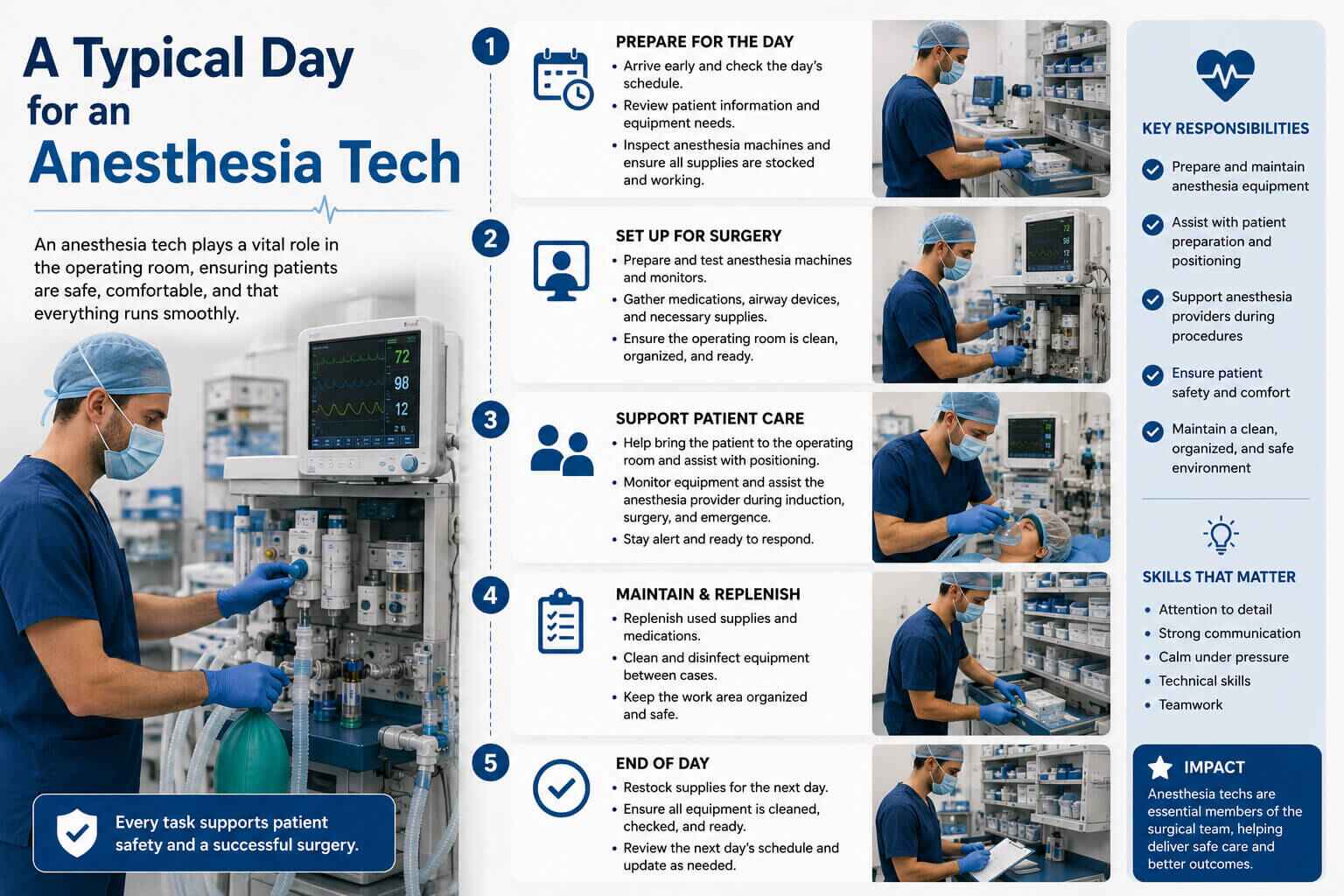
A normal shift may look like this:
Before Surgery
- Check the anesthesia machine
- Test monitors
- Prepare medications
- Organize airway supplies
During Surgery
- Assist anesthesia providers
- Replace equipment when needed
- Troubleshoot technical issues
- Maintain sterile supplies
After Surgery
- Clean equipment
- Restock supplies
- Prepare for the next patient
- Document equipment maintenance
This routine repeats throughout the day, depending on the surgical schedule.
Technology Is Changing the Profession
Healthcare technology continues to improve every year.
Modern anesthesia technicians now work with:
- Digital anesthesia workstations
- Electronic patient monitoring systems
- Advanced ventilators
- Ultrasound-guided equipment
- Automated medication tracking
- Smart inventory management systems
As hospitals adopt newer technologies, technicians receive ongoing training to stay current.
Job Outlook in 2026
Healthcare employment continues growing as populations age and demand for surgeries increases.
According to the U.S. Bureau of Labor Statistics, employment in healthcare occupations is projected to grow faster than the average for all occupations over the coming decade due to increasing healthcare needs.
The aging population contributes to higher numbers of:
- Joint replacement surgeries
- Heart procedures
- Cancer treatments
- Outpatient surgeries
As surgical volume increases, hospitals need skilled professionals who can support safe anesthesia care.
Interesting Facts About Anesthesia Technology
Here are a few facts many people don’t know:
- Millions of surgical procedures requiring anesthesia are performed every year worldwide.
- Modern anesthesia machines contain sophisticated safety systems that require regular testing before every procedure.
- Anesthesia technicians are often among the first staff members to prepare an operating room each morning.
- Many hospitals rely on anesthesia techs to help maintain emergency airway carts that can save lives during critical situations.
These responsibilities highlight why careful preparation is such an important part of surgical care.
Challenges of Being an Anesthesia Tech
Like any healthcare career, this profession has challenges.
Some common ones include:
- Long-standing hours
- Fast-paced operating rooms
- Emergencies
- Weekend or night shifts
- close attention to detail
- Working with complex medical equipment
Despite these challenges, many technicians enjoy the teamwork, variety, and opportunity to make a meaningful difference in patient care.
Is Anesthesia Technology a Good Career?
For many people, the answer is yes.
This career is ideal for individuals who:
- Enjoy healthcare
- Like technology
- Prefer hands-on work
- Stay calm under pressure
- Want to work in surgical environments
- Appreciate teamwork
It offers stable employment opportunities, continuous learning, and the satisfaction of helping patients during some of the most important moments of their medical care.
Tips for Becoming a Successful Anesthesia Tech
If you’re considering this profession, these habits can help:
- Learn medical equipment thoroughly.
- Practice excellent communication.
- Stay organized.
- Never skip safety checks.
- Continue learning new technologies.
- Build strong teamwork skills.
- Pay close attention to small details.
- Maintain professionalism under pressure.
These qualities often separate outstanding technicians from average performers.
Frequently Asked Questions
What is an anesthesia tech?
An anesthesia tech is a healthcare professional who prepares anesthesia equipment, assists anesthesia providers during procedures, and helps maintain patient safety before, during, and after surgery.
Do anesthesia techs give anesthesia?
No. Anesthesia technicians prepare equipment and provide technical support but do not independently administer anesthesia.
How long does it take to become an anesthesia tech?
Training time varies depending on the educational program. Many people complete their education in one to two years, followed by clinical training.
Is anesthesia technology a stressful job?
It can be. Operating rooms move quickly, and technicians must remain focused during surgeries and emergencies. Strong organization and teamwork help manage the pressure.
Is there demand for anesthesia techs?
Yes. As surgical procedures continue to increase and healthcare systems expand, skilled anesthesia technicians remain in demand across hospitals and surgical centers.
Final Takeaway
An anesthesia tech is a key member of every surgical team, ensuring that anesthesia equipment, supplies, and monitoring systems are ready for safe and efficient patient care. With specialized training, strong technical skills, and attention to detail, these professionals help surgeries run smoothly while supporting anesthesiologists and protecting patients. As healthcare technology advances and the demand for surgical services continues to grow in 2026 and beyond, anesthesia technology remains a rewarding career with strong opportunities for professional development and long-term job stability.