
Introduction
Choosing a healthcare career often comes down to one important question: How much can you earn? If you’re considering becoming an X-ray tech, you’ll be happy to know that it’s a stable profession with competitive pay, strong job demand, and several opportunities to increase your income through experience and specialization.
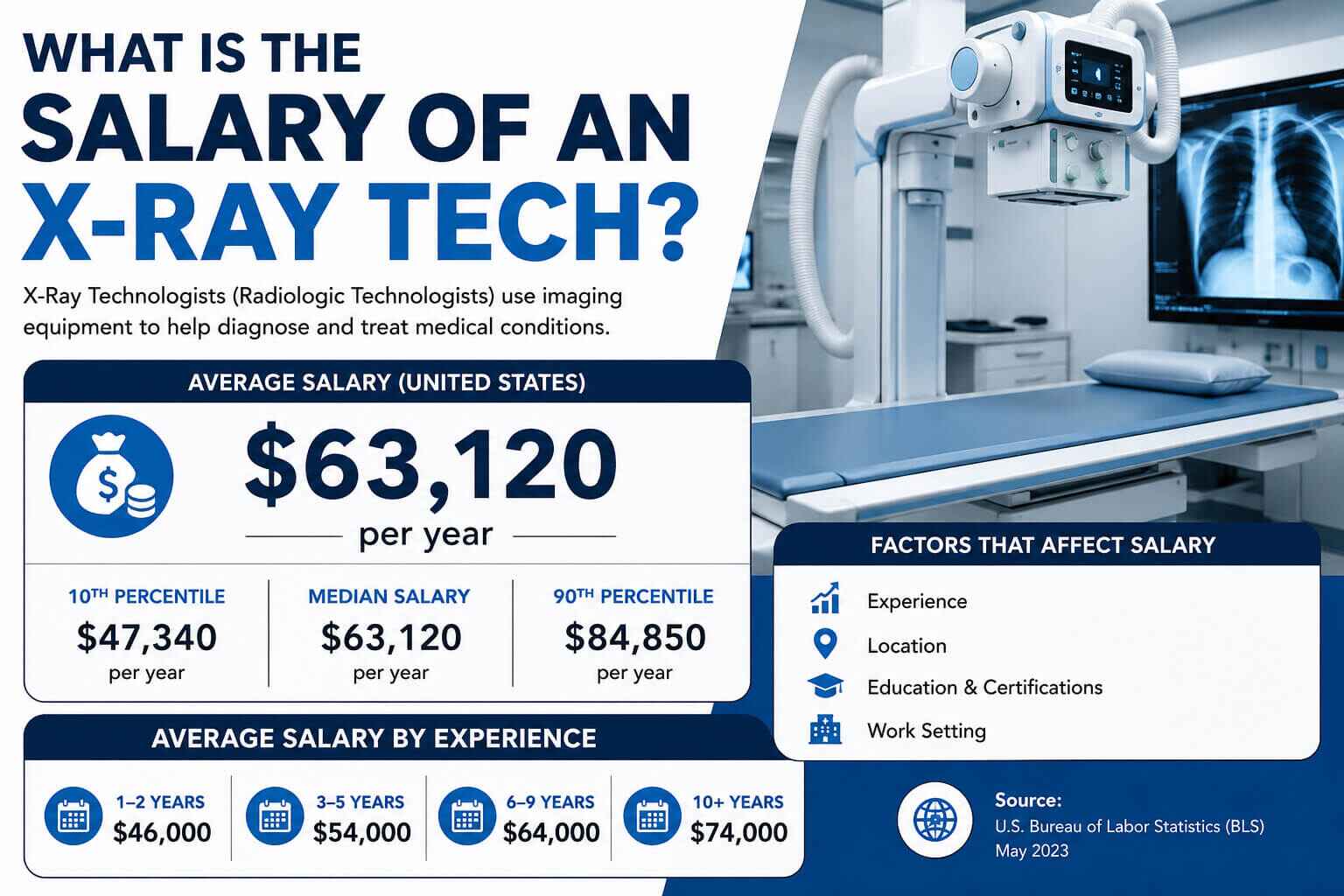
The average salary of an X-ray tech in the United States is approximately $77,660 per year (around $37.34 per hour), according to the latest data from the U.S. Bureau of Labor Statistics. Actual earnings depend on location, experience, certifications, employer type, work schedule, and specialization. Entry-level professionals typically earn less, while experienced imaging technologists can earn well above $100,000 annually in some states.
What Is the Salary of an X-Ray Tech?
An X-ray tech, also known as a radiologic technologist or radiographer, performs diagnostic imaging procedures that help physicians diagnose injuries and illnesses.
The profession offers solid earning potential, especially when compared with many careers that require only an associate degree.
Average Annual Salary
As of the latest official U.S. data:
- Average annual salary: $77,660
- Average hourly wage: $37.34
These figures represent nationwide averages, meaning some professionals earn considerably more depending on their workplace and experience.
Healthcare employers continue investing in diagnostic imaging because medical imaging remains essential for emergency care, surgery, orthopedics, cancer treatment, and routine diagnosis.
Average X-Ray Tech Salary by Experience
Experience is one of the biggest factors affecting income.
| Experience Level | Average Annual Salary |
|---|---|
| Entry-Level (0–2 years) | $50,000–$65,000 |
| Early Career (3–5 years) | $65,000–$78,000 |
| Mid-Career (5–10 years) | $78,000–$90,000 |
| Experienced (10+ years) | $90,000–$110,000+ |
These figures vary depending on employer and geographic location.
Professionals who consistently expand their imaging skills often move into higher-paying positions faster than those who remain limited to basic radiography.
What Factors Affect the Salary of an X-Ray Tech?
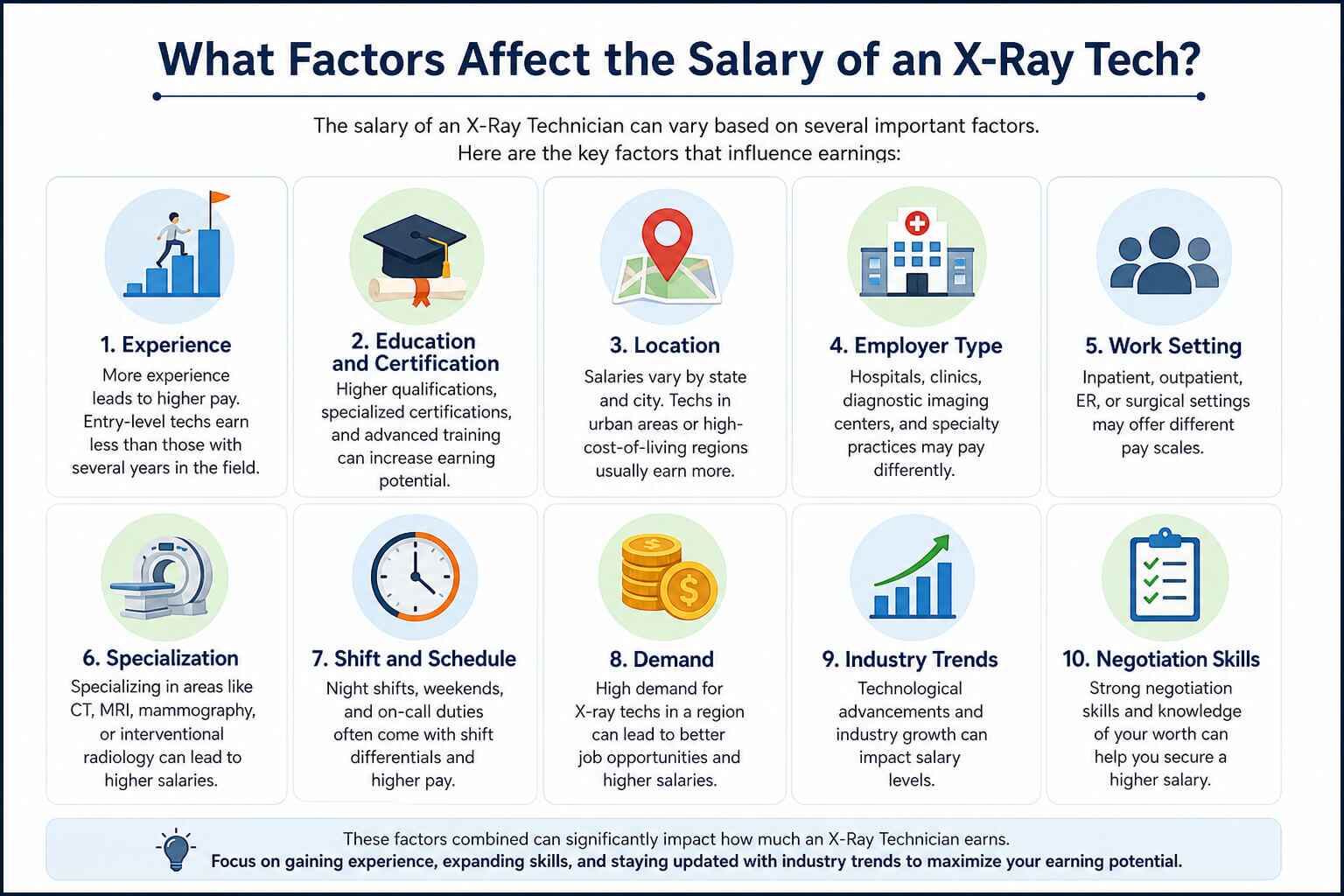
Several factors determine how much an X-ray technician earns.
1. Geographic Location
Location has one of the largest impacts on salary.
States with higher living costs generally offer higher wages. Urban hospitals usually pay more than rural healthcare facilities.
Major metropolitan areas often provide:
- Higher hourly rates
- Overtime opportunities
- Shift differentials
- Better benefits
- Sign-on bonuses
2. Years of Experience
Healthcare employers value practical experience.
An experienced technologist can:
- Handle difficult imaging cases
- Train new staff
- Work independently
- Operate advanced equipment
- Improve patient workflow
Because of these skills, employers frequently reward experienced professionals with higher salaries.
3. Certifications
Additional certifications can significantly increase earning potential.
Examples include:
- CT (Computed Tomography)
- MRI
- Mammography
- Bone Densitometry
- Interventional Radiology
Technologists certified in multiple imaging specialties often qualify for higher-paying positions.
4. Employer Type
Not every healthcare employer pays the same.
Common employers include:
- Hospitals
- Outpatient imaging centers
- Physician offices
- Urgent care clinics
- Government healthcare facilities
- Veterans hospitals
- Specialty surgical centers
Hospitals generally offer the highest earning potential because they operate around the clock and require imaging services for emergency patients.
5. Shift Schedule
Working nights, weekends, holidays, or overnight shifts usually comes with additional compensation.
Common pay incentives include:
- Night differential
- Weekend differential
- Holiday pay
- Overtime
- On-call pay
These bonuses can substantially increase yearly earnings.
Highest Paying States for X-Ray Techs
Some states consistently pay above the national average.
Examples include:
- California
- Hawaii
- Massachusetts
- Oregon
- Washington
- Alaska
California frequently reports some of the highest salaries nationwide due to strong demand and a higher cost of living.
However, a higher salary should always be compared against local housing costs, taxes, and daily expenses.
Highest Paying Cities
Large cities generally provide more opportunities for experienced radiologic technologists.
Examples include:
- San Francisco
- San Jose
- Los Angeles
- Seattle
- Boston
- New York City
These cities often feature:
- Major trauma hospitals
- Academic medical centers
- Specialized imaging facilities
- Research hospitals
Such employers typically pay above-average wages.
Lowest Paying Areas
Smaller communities and rural healthcare facilities often pay less.
However, lower salaries can be balanced by:
- Lower living expenses
- Less competition
- Better work-life balance
- Shorter commute times
For many professionals, the overall quality of life matters more than salary alone.
Salary by Healthcare Setting
Different workplaces offer different compensation levels.
| Workplace | Typical Salary Range |
|---|---|
| Hospital | $70,000–$100,000+ |
| Outpatient Imaging Center | $65,000–$90,000 |
| Physician Office | $55,000–$80,000 |
| Urgent Care | $60,000–$85,000 |
| Government Facility | $70,000–$95,000 |
| Mobile Imaging | $80,000–$110,000 |
Mobile imaging positions often pay more because travel is required.
Hourly Wage for an X-Ray Tech
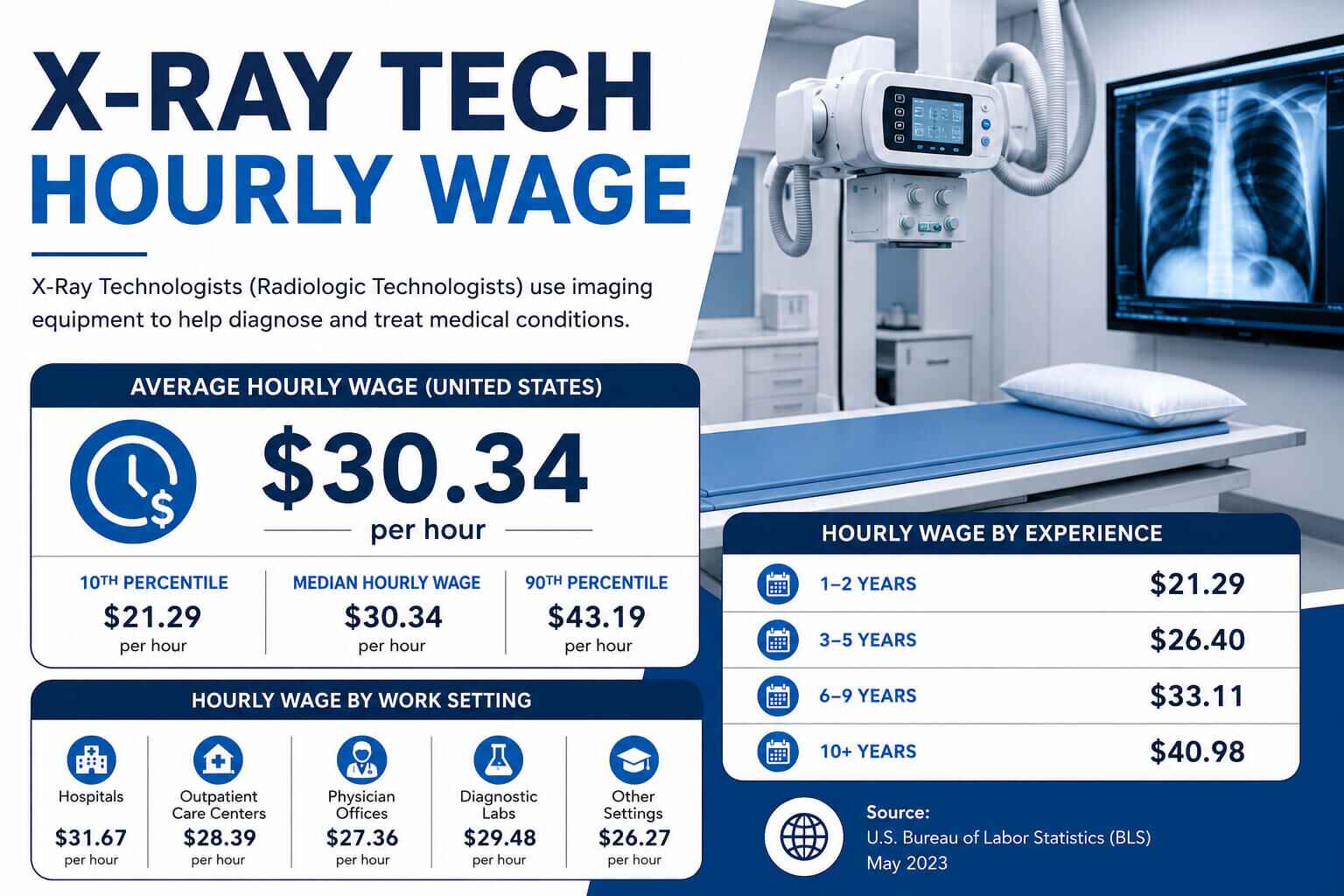
Many employers pay radiologic technologists by the hour.
Typical hourly earnings include:
- Entry level: $24–30/hour
- Average: $37/hour
- Experienced: $45–55/hour
- Highly specialized: $60+/hour
Over time can significantly increase annual income.
For example, an experienced technologist working regular overtime may earn tens of thousands more each year.
Can X-Ray Techs Make Over $100,000?
Yes.
Although the national average is lower, many technologists earn six-figure salaries.
This usually happens when they combine several advantages:
- Living in a high-paying state
- Working in a large hospital
- Having multiple certifications
- Working overtime
- Taking weekend shifts
- Having many years of experience
Travel radiologic technologists may also exceed this income level.
Travel X-Ray Tech Salary
Travel healthcare has become increasingly popular.
Travel X-ray technologists work temporary assignments across the country.
Benefits often include:
- Higher hourly pay
- Housing stipends
- Travel reimbursement
- Completion bonuses
- Flexible contracts
Many travel professionals earn considerably more than permanent staff, although income depends on assignment length and location.
Salary Compared With Other Healthcare Careers
Many prospective students compare radiologic technology with similar healthcare professions.
| Career | Average Salary |
|---|---|
| X-Ray Tech | ~$77,660 |
| MRI Technologist | Higher than average X-ray pay |
| CT Technologist | Higher than average X-ray pay |
| Ultrasound Technologist | Generally higher |
| Radiation Therapist | Significantly higher |
| Medical Assistant | Lower |
| Pharmacy Technician | Lower |
Advanced imaging specialties generally command higher salaries because they require additional training and certification.
Job Outlook for X-Ray Techs
Salary means little without job opportunities.
Fortunately, radiologic technology remains one of the more stable healthcare careers.
According to the U.S. Bureau of Labor Statistics, employment for radiologic and MRI technologists is projected to grow steadily over the coming decade, with thousands of job openings expected each year due to growth and workforce replacement.
Several trends continue driving demand:
- Aging populations
- More chronic diseases
- Increased diagnostic imaging
- Growth in outpatient care
- Expanding emergency services
Healthcare systems continue to rely heavily on diagnostic imaging to improve patient outcomes.
Benefits Beyond Salary
Compensation extends beyond annual wages.
Many employers provide valuable benefits, including:
- Health insurance
- Dental insurance
- Vision coverage
- Retirement plans
- Paid vacation
- Sick leave
- Tuition reimbursement
- Continuing education support
- Life insurance
These benefits can add substantial value to an overall compensation package.
How to Increase Your Salary as an X-Ray Tech
If your goal is to maximize income, there are several proven strategies.
Earn Additional Certifications
Learning CT, MRI, or mammography often opens higher-paying opportunities.
Gain Experience
Employers reward dependable professionals who can work independently and mentor junior staff.
Work in Specialized Facilities
Trauma centers, surgical hospitals, and advanced imaging centers often pay more.
Consider Travel Assignments
Travel positions can dramatically increase earnings while allowing professionals to experience different healthcare systems.
Pursue Leadership Roles
Experienced technologists may advance into positions such as:
- Lead Technologist
- Imaging Supervisor
- Clinical Instructor
- Radiology Manager
Leadership roles usually come with increased responsibility and higher salaries.
Education Requirements
One reason radiologic technology attracts many students is that the educational pathway is relatively short compared with many other healthcare careers.
Typical steps include:
- Complete an accredited radiologic technology program.
- Finish supervised clinical training.
- Pass the national certification examination.
- Obtain state licensure if required.
- Continue professional education.
Many graduates enter the workforce within two years after beginning an associate degree program.
Is Becoming an X-Ray Tech Worth It?
For many people, yes.
The profession offers an attractive balance between education requirements, earning potential, and long-term job stability.
Advantages include:
- Competitive salary
- Growing healthcare demand
- Strong job security
- Opportunities for advancement
- Meaningful patient interaction
- Multiple career specialties
- Flexible schedules
Individuals who enjoy science, technology, and patient care often find the profession both rewarding and financially stable.
Real-World Example
Consider two newly certified technologists.
Technologist A accepts a position at a small outpatient clinic in a rural community. The starting salary is around $58,000 per year, but housing costs are affordable, and work hours are predictable.
Technologist B begins work at a major trauma hospital in California. The starting salary is substantially higher, but housing and living expenses are also much greater. By earning additional CT certification and taking occasional night shifts, this technologist increases annual income significantly within a few years.
These examples show why salary should always be evaluated alongside cost of living, career growth opportunities, and personal lifestyle preferences.
Statistics Worth Knowing

Several facts help illustrate the profession’s value:
- The U.S. Bureau of Labor Statistics reports an average annual wage of $77,660 for radiologic technologists.
- Healthcare occupations are projected to add substantially more jobs than many other industries over the coming decade because of increasing demand for medical services.
- Diagnostic imaging plays a critical role in modern medicine, with millions of imaging procedures performed annually to diagnose fractures, infections, heart disease, cancer, and other conditions.
These trends support continued demand for skilled imaging professionals.
Frequently Asked Questions
What is the average salary of an X-ray tech?
The average salary of an X-ray tech in the United States is about $77,660 per year, although earnings vary based on experience, employer, certifications, and location.
Which state pays X-ray techs the most?
California is consistently among the highest-paying states for radiologic technologists, followed by states such as Hawaii, Massachusetts, Oregon, Washington, and Alaska.
Can an X-ray tech earn over $100,000?
Yes. Experienced technologists working in high-paying states, specialized imaging departments, or travel positions can earn more than $100,000 annually.
Do hospitals pay more than clinics?
In many cases, yes. Hospitals typically offer higher salaries because they provide emergency imaging services around the clock and often include overtime and shift differentials.
How can an X-ray tech increase their salary?
The best ways include earning advanced certifications, gaining experience, working in specialized hospitals, accepting travel assignments, taking leadership roles, and working evening or weekend shifts.
Final Takeaway
The salary of an X-ray tech makes this career one of the most attractive options for individuals seeking a rewarding role in healthcare without spending many years in medical school. With an average annual income of approximately $77,660, steady job growth, and numerous opportunities for specialization, radiologic technology offers both financial stability and long-term career potential.
Income can vary widely depending on where you work, your experience, certifications, and willingness to pursue advanced imaging specialties. Whether you’re just beginning your healthcare journey or considering a career change, becoming an X-ray tech provides a practical path to a well-paying profession that remains essential to modern medicine.