
Introduction
Mobile phone service has changed dramatically over the last decade. Today, you no longer need to buy a plan directly from the biggest wireless carriers to get reliable coverage. Instead, millions of people are switching to virtual mobile networks, also known as Mobile Virtual Network Operators (MVNOs), to save money while keeping excellent service.
Whether you’re looking for a cheaper phone plan, better customer service, or more flexible options, understanding virtual mobile networks can help you make a smarter decision.
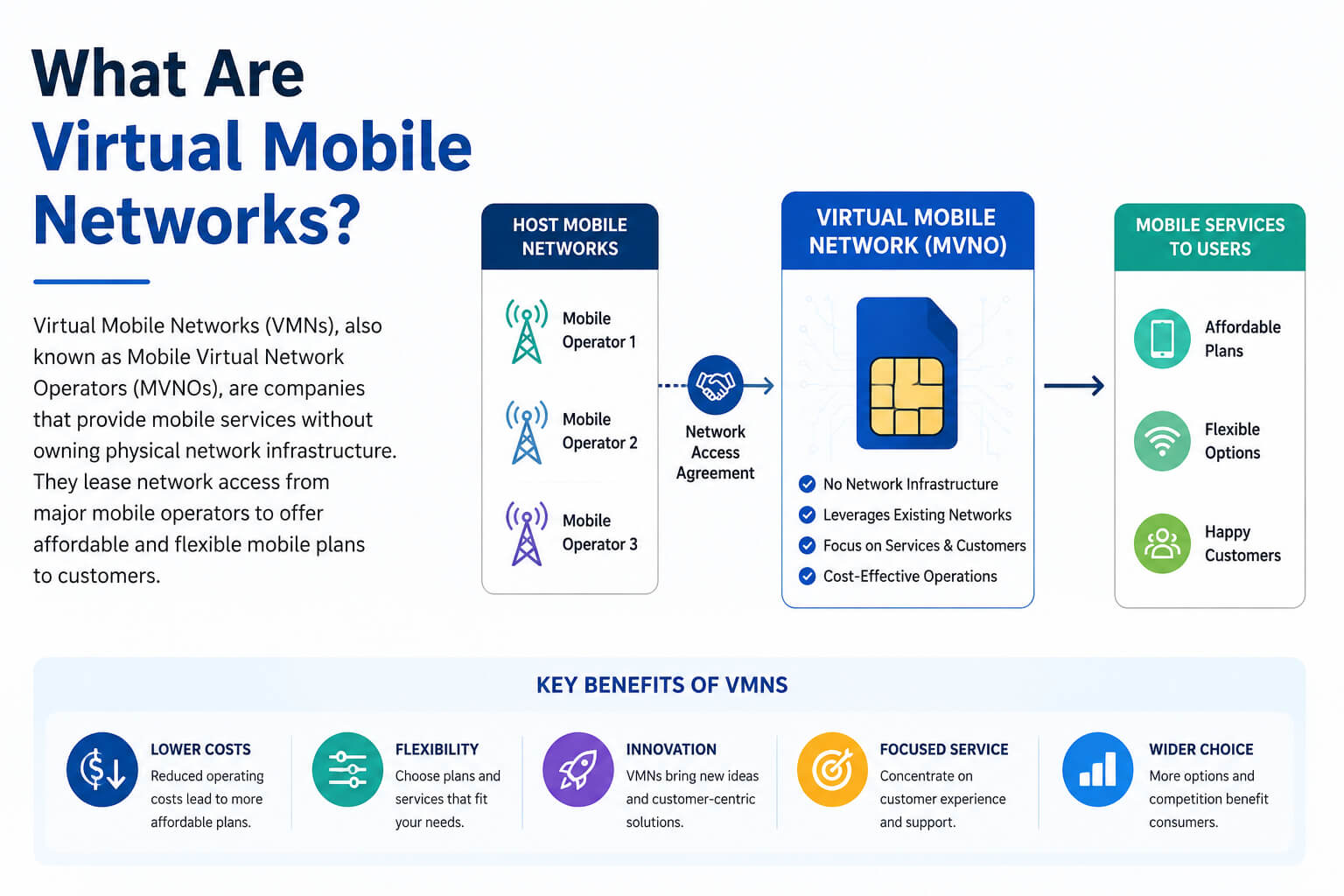
Virtual mobile networks (MVNOs) are wireless providers that do not own cellular towers. Instead, they lease network access from major carriers and sell mobile plans under their own brand. They often offer lower prices, flexible contracts, and competitive features while using the same nationwide cellular infrastructure.
What Are Virtual Mobile Networks?
A virtual mobile network is a wireless service provider that offers mobile phone plans without owning its own cellular infrastructure.
Instead of building expensive cell towers and maintaining large wireless networks, these companies purchase network access from established carriers and resell it to customers.
Think of it like renting instead of owning.
A traditional mobile carrier builds and operates its network. A virtual mobile network rents capacity on that network and focuses on customer service, pricing, and unique plan options.
This business model allows MVNOs to keep operating costs low and pass savings on to consumers.
How Do Virtual Mobile Networks Work?
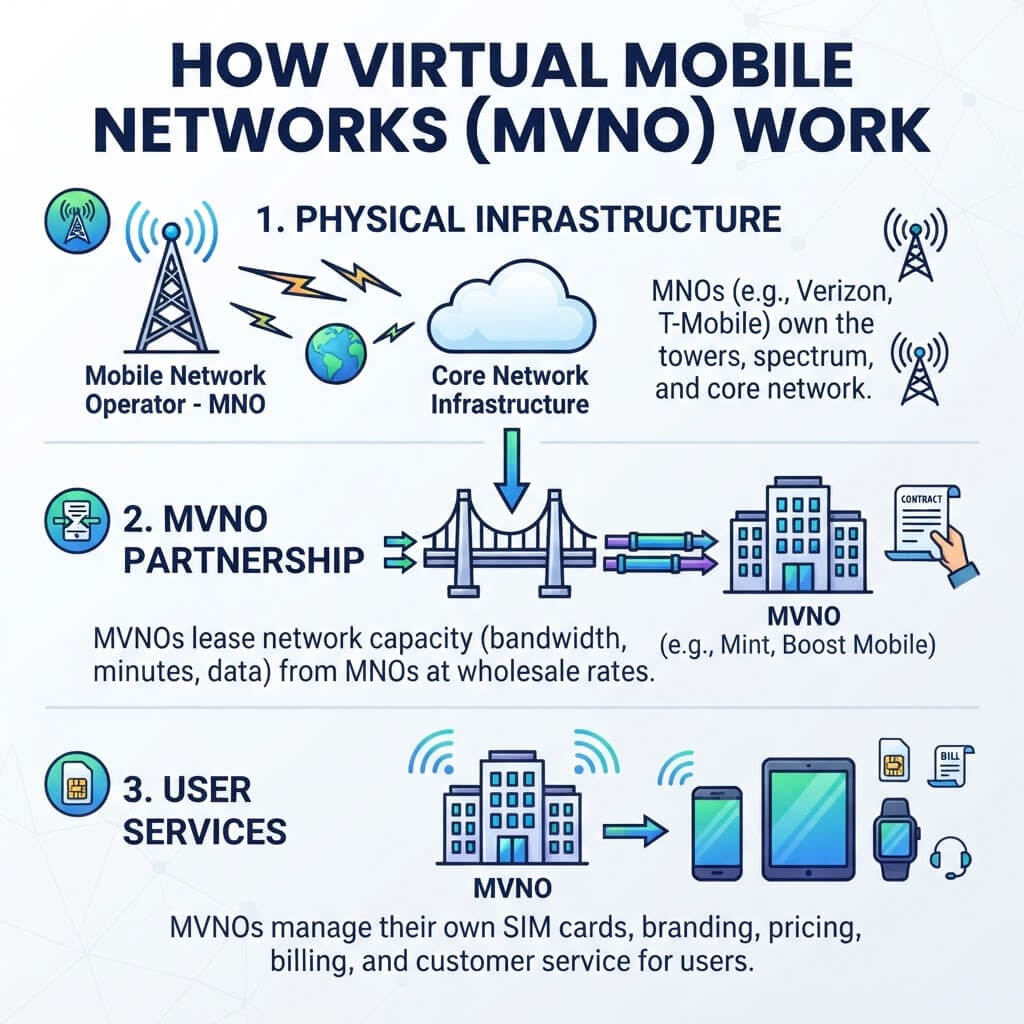
Virtual mobile networks operate through agreements with major wireless carriers.
Here’s how the process works:
- Major carriers build and maintain wireless infrastructure.
- MVNOs purchase network capacity in bulk.
- The MVNO creates its own plans and pricing.
- Customers use the same cellular towers as the host carrier.
- Billing and customer support are handled by the MVNO.
From the customer’s perspective, everything feels similar to using a traditional carrier.
You receive:
- A SIM card or eSIM
- Mobile phone service
- Calls and texts
- Mobile data
- Customer support
- Online account management
The biggest difference is who sends your monthly bill.
What Is an MVNO?
MVNO stands for Mobile Virtual Network Operator.
It is simply another name for a virtual mobile network.
Unlike major wireless companies, MVNOs do not own:
- Cell towers
- Radio spectrum licenses
- Large nationwide wireless infrastructure
Instead, they purchase access from existing carriers and create affordable wireless plans.
Today, MVNOs serve millions of customers around the world.
Why Are Virtual Mobile Networks Becoming So Popular?
The popularity of MVNOs continues to grow because consumers are becoming more price-conscious.
Many people realize they don’t need expensive premium plans with features they never use.
Common reasons people switch include:
- Lower monthly bills
- No long-term contracts
- Flexible prepaid options
- Easy online activation
- Better value
- Family discounts
- International calling packages
As eSIM technology becomes more common in 2026, switching between providers has become easier than ever.
Do Virtual Mobile Networks Use the Same Coverage?
Yes.
One of the biggest misconceptions is that virtual mobile networks have weaker coverage.
In reality, MVNO customers use the same towers operated by the host carrier.
For example, if an MVNO uses a nationwide carrier’s network, customers generally receive the same geographic coverage.
However, there may be differences in:
- Data prioritization
- Network management during congestion
- Roaming agreements
- Premium features
For everyday users, these differences are often difficult to notice.
Advantages of Virtual Mobile Networks
There are many reasons consumers choose virtual mobile networks over traditional carriers.
Lower Monthly Costs
This is the biggest advantage.
Without the expense of maintaining cellular infrastructure, MVNOs can offer significantly lower prices.
Many unlimited plans cost much less than comparable plans from major carriers.
No Long-Term Contracts
Most MVNOs operate on prepaid or month-to-month plans.
That means you can switch providers whenever you want.
This flexibility is especially useful if:
- You travel often
- Your data needs to change
- You want to test different providers
Flexible Data Plans
Not everyone needs unlimited data.
Many virtual mobile networks offer:
- 1 GB plans
- 5 GB plans
- 10 GB plans
- Unlimited plans
- Family bundles
This helps customers avoid paying for unused data.
Easy Online Sign-Up
Many MVNOs are digital-first companies.
Customers can often:
- Activate service online
- Download an eSIM instantly
- Transfer their number
- Manage billing through an app
Some users never need to visit a physical store.
Competitive International Options
Many virtual mobile networks focus on international customers.
Some offer:
- Affordable international calling
- Global roaming packages
- Low-cost international texting
These plans can be attractive for students, travelers, and families with relatives overseas.
Potential Drawbacks
Virtual mobile networks aren’t perfect.
Before switching, consider these possible limitations.
Network Prioritization
During periods of heavy congestion, some MVNO customers may experience slower data speeds.
This doesn’t happen all the time, but it can occur in crowded locations like:
- Stadiums
- Concerts
- Airports
- Major cities during peak hours
Fewer Physical Stores
Many virtual mobile networks operate almost entirely online.
If you prefer face-to-face customer service, this may be a disadvantage.
Limited Premium Features
Some advanced features available from major carriers may not be included.
Examples include:
- Premium roaming
- Device financing
- Exclusive streaming bundles
- Priority customer support
Types of Virtual Mobile Networks
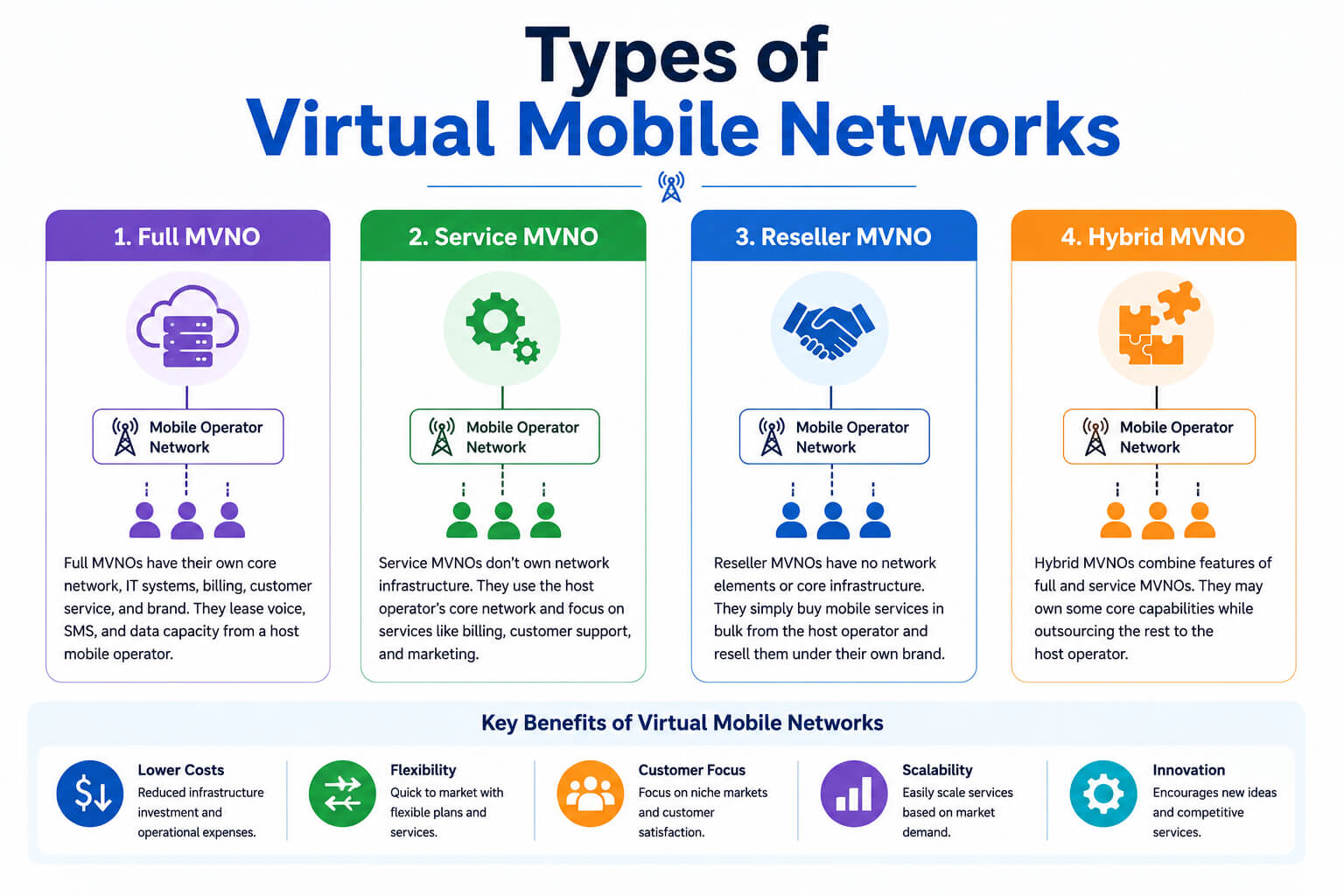
Not all MVNOs operate the same way.
Full MVNO
A full MVNO manages most technical operations itself.
This includes:
- Billing
- Customer databases
- SIM management
- Network services
Only radio access comes from the host carrier.
Light MVNO
A light MVNO relies more heavily on the host network.
It focuses mainly on:
- Sales
- Marketing
- Customer support
This model requires less infrastructure.
Branded Reseller
Some companies simply resell another provider’s service with minimal technical involvement.
Customers may never realize the service operates through another carrier.
Who Should Consider a Virtual Mobile Network?
Virtual mobile networks aren’t just for budget shoppers.
They can be ideal for many different users.
Students
Students often want affordable plans without long-term commitments.
MVNOs can significantly reduce monthly expenses.
Families
Family plans often provide multiple lines at discounted rates.
This makes budgeting much easier.
Seniors
Many seniors use limited data.
Smaller, inexpensive plans often provide everything they need.
Travelers
Some providers specialize in international calling and roaming.
This can reduce travel communication costs.
Light Data Users
If you mainly use Wi-Fi, paying for expensive unlimited plans may not make sense.
A smaller plan could save hundreds of dollars annually.
Virtual Mobile Networks vs Traditional Carriers
| Feature | Virtual Mobile Networks | Traditional Carriers |
|---|---|---|
| Own network | No | Yes |
| Monthly cost | Lower | Higher |
| Contracts | Rare | Sometimes |
| Coverage | Same host network | Own infrastructure |
| Physical stores | Limited | Many |
| Customer support | Mostly online | Online + retail |
| Flexibility | High | Moderate |
Real-World Examples of Virtual Mobile Networks
Many well-known wireless brands operate as MVNOs.
Examples include providers that lease network access from major carriers while creating their own pricing and customer experience.
Some focus on:
- Budget plans
- Unlimited data
- International users
- Families
- Seniors
- Business customers
The MVNO market has expanded rapidly worldwide because customers increasingly prioritize value over brand recognition.
Industry Growth and Market Trends in 2026
Virtual mobile networks continue to gain momentum globally.
Several trends are driving this growth.
eSIM Adoption
More smartphones now support eSIM technology.
Customers can activate service within minutes without waiting for a physical SIM card.
Increased Competition
As more MVNOs enter the market, consumers benefit from:
- Better pricing
- Larger data allowances
- More promotional offers
- Improved customer support
5G Expansion
Most virtual mobile networks now offer access to nationwide 5G coverage where available.
This means customers can enjoy faster download speeds without paying premium carrier prices.
Important Facts About Virtual Mobile Networks
Here are some interesting facts.
- According to the GSMA, there are hundreds of MVNOs operating worldwide across dozens of countries.
- The Federal Communications Commission (FCC) recognizes MVNOs as an important part of increasing competition in the wireless market.
- Industry analysts estimate that the global MVNO market continues to grow each year as consumers seek lower-cost alternatives and digital-first services.
- eSIM adoption is accelerating worldwide, making it easier than ever to switch between providers without replacing a physical SIM card.
These trends indicate that virtual mobile networks are becoming a mainstream option rather than a niche alternative.
Tips for Choosing the Right Virtual Mobile Network
Before switching, compare more than just price.
Consider:
- Network coverage in your area
- Monthly data usage
- Customer service reputation
- International calling needs
- Hotspot availability
- eSIM compatibility
- Family plan discounts
- Mobile app quality
A slightly higher-priced plan may offer better overall value if it includes features you regularly use.
Common Myths About Virtual Mobile Networks
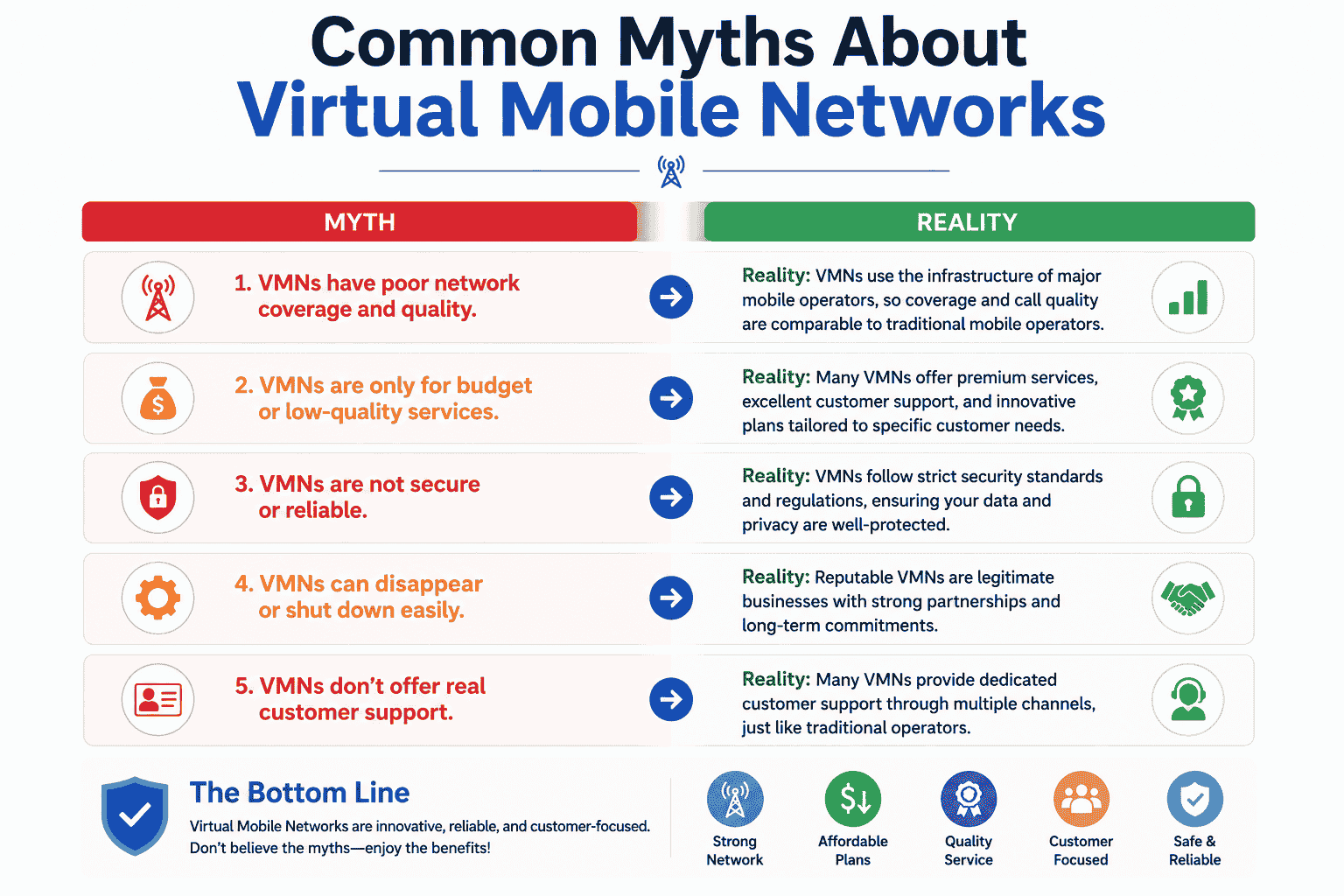
They Have Worse Coverage
False.
Coverage generally depends on the host carrier’s network.
They’re Only for Budget Users
False.
Many professionals, travelers, and businesses use MVNOs because they provide excellent value.
Switching Is Difficult
False.
With number portability and eSIM activation, switching providers is often completed within minutes.
5G Isn’t Available
False.
Many MVNOs now include nationwide 5G access where supported by the host network.
Frequently Asked Questions
Are virtual mobile networks reliable?
Yes. Most virtual mobile networks provide reliable service because they operate on established nationwide carrier networks. Reliability usually depends on the host carrier’s coverage in your location.
Do virtual mobile networks support 5G?
Yes. Many MVNOs now offer 5G service on compatible devices, provided their host carrier supports 5G coverage in the area.
Can I keep my phone number when switching?
Yes. Most virtual mobile networks allow you to transfer your existing phone number through a process called number porting.
Are virtual mobile networks cheaper than major carriers?
In many cases, yes. Lower operating costs allow MVNOs to offer competitive pricing while still using major carrier infrastructure.
Who should use a virtual mobile network?
They’re ideal for students, families, travelers, seniors, light data users, and anyone looking to reduce monthly mobile costs without sacrificing reliable coverage.
Final Takeaway
Virtual mobile networks have transformed the wireless industry by giving consumers more choice, lower prices, and greater flexibility. Instead of building expensive cellular infrastructure, these providers lease access from established carriers and compete through affordable plans, digital convenience, and customer-focused service.
In 2026, with widespread 5G availability, growing eSIM support, and increasing competition, choosing a virtual mobile network is no longer a compromise—it’s a practical option for many users. Before making the switch, compare coverage in your area, review your monthly data needs, and look beyond the advertised price to ensure the plan matches how you actually use your phone. For millions of people, an MVNO delivers the right balance of cost, performance, and flexibility without the premium price tag.