
Learn the difference between a dinner suit and a business suit, including style, occasions, fabrics, and dress codes to choose the right outfit.
Introduction
Choosing the right suit can make a lasting impression, whether you’re attending a formal gala or an important business meeting. One of the most common style questions is the difference between a dinner suit vs business suit. While both are tailored garments, they serve completely different purposes and follow different dress codes.
A business suit is designed for professional settings, everyday office wear, and corporate events. A dinner suit, often called a tuxedo in the United States, is reserved for formal evening occasions such as weddings, black-tie dinners, charity galas, and award ceremonies.
Understanding when and how to wear each suit helps you dress appropriately, project confidence, and avoid common fashion mistakes. This guide explains every important difference so you can confidently choose the right suit for any occasion.
A business suit is worn for professional and semi-formal daytime events, while a dinner suit is reserved for black-tie evening occasions. The main differences include satin details, accessories, shirt style, footwear, and the level of formality.
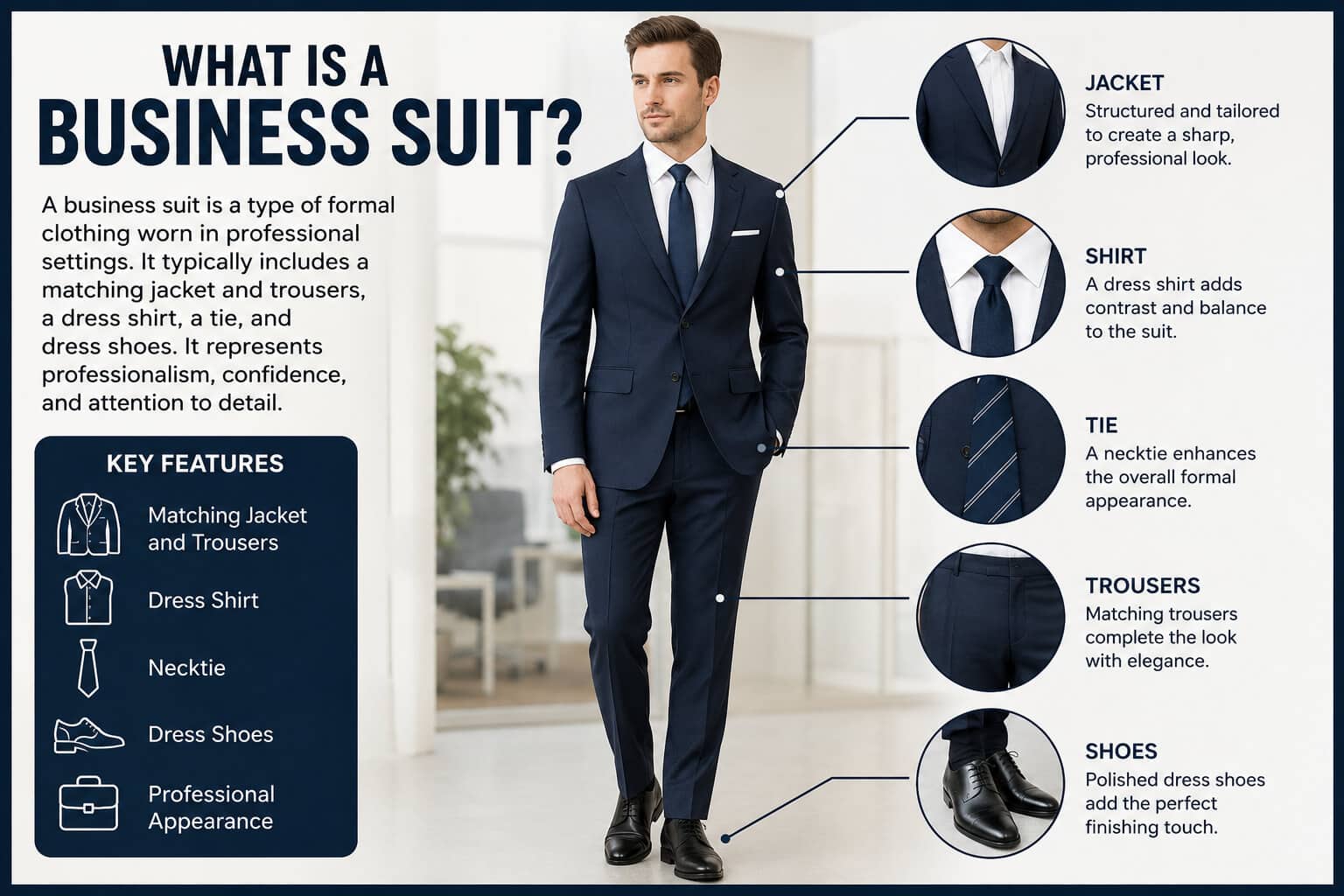
What Is a Business Suit?
A business suit is a classic outfit designed for professional environments. It combines elegance with practicality and is appropriate for offices, meetings, interviews, conferences, and networking events.
A traditional business suit typically includes:
- Matching jacket and trousers
- Dress shirt
- Business tie
- Leather dress shoes
- Optional waistcoat (three-piece suit)
Business suits prioritize professionalism rather than luxury.
Characteristics of a Business Suit
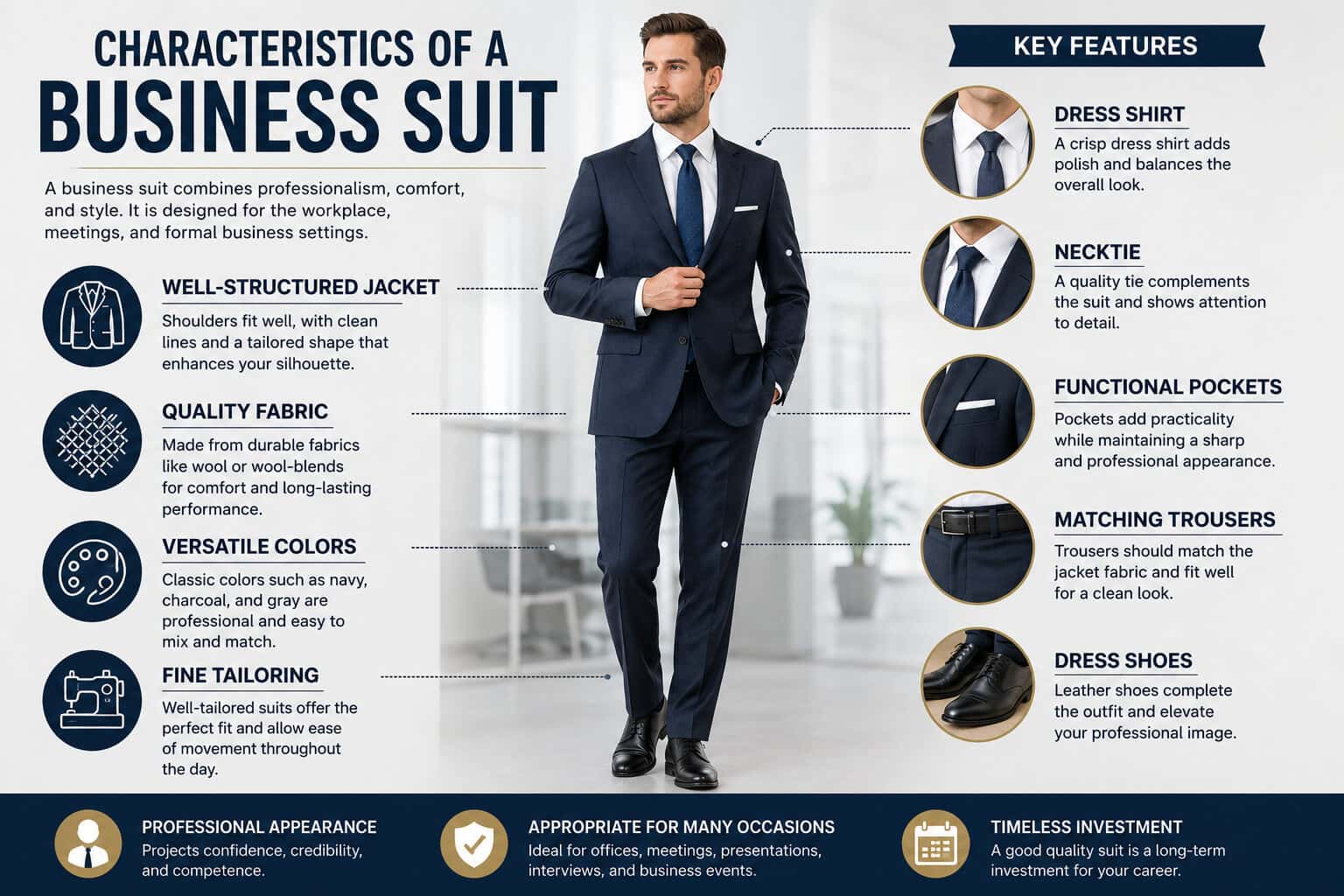
Conservative Design
Business suits usually feature clean lines, simple lapels, and minimal decorative details.
Common Colors
Popular colors include:
- Navy blue
- Charcoal gray
- Black
- Medium gray
- Dark brown (less common)
These colors are versatile and suitable for most professional settings.
Fabric Choices
Business suits are commonly made from:
- Wool
- Wool blends
- Cotton
- Linen (summer)
- Performance fabrics
What Is a Dinner Suit?
A dinner suit is the highest level of formal evening wear outside of white tie. It is commonly known as a tuxedo in North America.
Unlike business suits, dinner suits include luxurious satin details and are designed specifically for elegant nighttime events.
A complete dinner suit generally includes:
- Dinner jacket
- Matching trousers with a satin stripe
- Formal white dress shirt
- Bow tie
- Cummerbund or waistcoat
- Patent leather shoes
Characteristics of a Dinner Suit
Satin Lapels
The most recognizable feature is the satin-covered lapels.
Popular lapel styles include:
- Shawl lapel
- Peak lapel
Satin Trouser Stripe
Dinner trousers feature a satin stripe running down each side.
Formal Accessories
Instead of a necktie, dinner suits are traditionally paired with:
- Black bow tie
- Cufflinks
- Stud buttons
- Pocket square
Dinner Suit vs Business Suit: Major Differences
| Feature | Dinner Suit | Business Suit |
|---|---|---|
| Purpose | Formal evening events | Office and business wear |
| Dress Code | Black Tie | Business Formal |
| Lapels | Satin | Fabric matching suit |
| Tie | Bow tie | Necktie |
| Shirt | Pleated or tuxedo shirt | Standard dress shirt |
| Shoes | Patent leather | Leather Oxfords or Derbies |
| Time of Wear | Evening | Daytime or evening |
| Formality | Extremely formal | Professional |
When Should You Wear a Business Suit?
A business suit works well for many professional situations.
Examples include:
- Office work
- Job interviews
- Business presentations
- Conferences
- Client meetings
- Corporate networking
- Business lunches
It also works for some semi-formal weddings if the invitation doesn’t specify black tie.
When Should You Wear a Dinner Suit?
Dinner suits are appropriate only for elegant evening occasions.
Common events include:
- Black-tie weddings
- Charity galas
- Awards ceremonies
- Opera performances
- Formal dinners
- Luxury cruises
- Evening receptions
If an invitation says “Black Tie,” a dinner suit is usually expected.
Fabric Differences
Business Suit Fabrics
Designed for durability and comfort.
Popular options:
- Worsted wool
- Cotton
- Linen
- Wool blends
These fabrics resist wrinkles and perform well during long workdays.
Dinner Suit Fabrics
Dinner suits use premium materials.
Common fabrics include:
- Fine wool
- Velvet
- Mohair blends
- Satin trims
The satin details create an elegant evening appearance.
Shirt Differences
Business Suit Shirt
Business shirts usually feature:
- Spread collar
- Point collar
- Button cuffs or French cuffs
- Plain front
Colors include:
- White
- Light blue
- Soft stripes
Dinner Suit Shirt
Dinner shirts are more formal.
Features include:
- Wing collar or turn-down collar
- Pleated front
- French cuffs
- Stud buttons
White remains the traditional choice.
Tie Differences
One of the easiest ways to distinguish the two suits is the neckwear.
Business Suit
Usually paired with:
- Silk tie
- Patterned tie
- Knit tie
Dinner Suit
Traditionally worn with:
- Black silk bow tie
A standard necktie is generally not considered appropriate with a classic dinner suit.
Shoe Differences
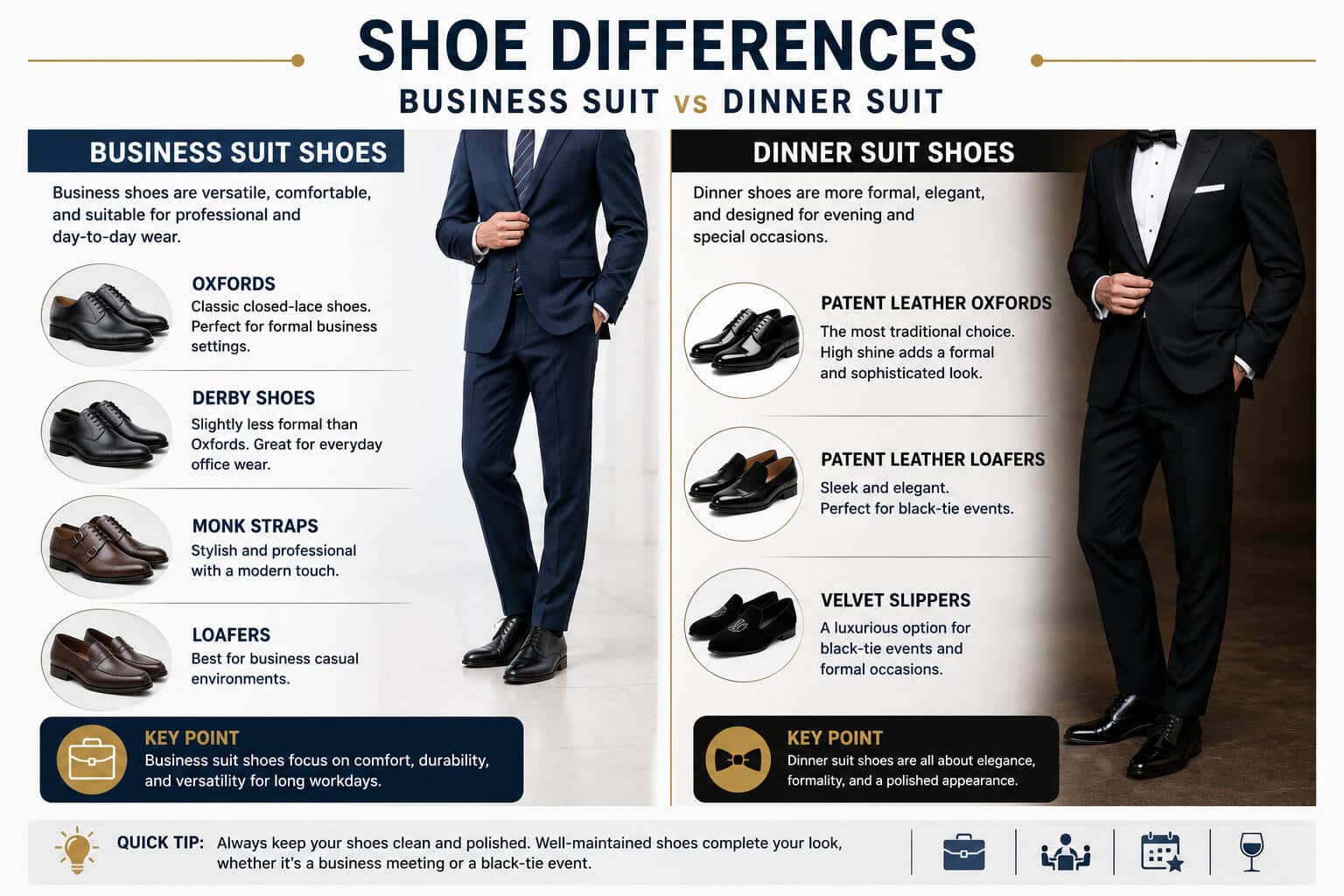
Business Suit Shoes
Common options:
- Oxford shoes
- Derby shoes
- Monk straps
- Loafers (business casual)
Leather finishes may be matte or lightly polished.
Dinner Suit Shoes
Traditional choices include:
- Patent leather Oxfords
- Patent loafers
- Velvet evening slippers
These shoes complement the formal elegance of the dinner suit.
Accessories Comparison
Business Suit Accessories
- Wristwatch
- Leather belt
- Tie clip
- Pocket square
- Briefcase
Accessories remain subtle and practical.
Dinner Suit Accessories
- Cufflinks
- Stud set
- Silk pocket square
- Cummerbund
- Waistcoat
- Black bow tie
These accessories enhance the luxurious look.
Color Options
Business Suit Colors
Professional colors include:
- Navy
- Charcoal
- Gray
- Black
- Brown
Patterns such as pinstripes or checks are also common.
Dinner Suit Colors
Traditional options include:
- Black
- Midnight blue
Modern styles sometimes include:
- White dinner jacket
- Burgundy velvet
- Dark green velvet
These variations are usually reserved for fashion-forward formal events.
Can You Wear a Business Suit Instead of a Dinner Suit?
Sometimes—but only if the event isn’t strictly black tie.
For example:
Suitable:
- Cocktail parties
- Semi-formal weddings
- Business dinners
- Graduation ceremonies
Not suitable:
- Black-tie galas
- Formal award ceremonies
- Luxury evening events
- Invitations specifically requesting a dinner suit or tuxedo
Common Mistakes to Avoid
Many people accidentally break formal dress etiquette.
Avoid these mistakes:
- Wearing a necktie with a classic dinner suit
- Wearing brown shoes with black evening wear
- Using a business shirt with visible buttons for black-tie events
- Choosing shiny business suits for office settings
- Ignoring the dress code on invitations
How to Choose the Right Suit
Consider these factors before buying.
Occasion
Always match your suit to the event.
Time of Day
Business suits are suitable all day.
Dinner suits are primarily evening attire.
Budget
If you attend formal events rarely, renting a dinner suit may be more practical.
Business suits provide greater everyday value.
Fit
Regardless of style, proper tailoring is essential.
A well-fitted suit always looks more expensive than an ill-fitting luxury suit.
Style Tips for Both Suits
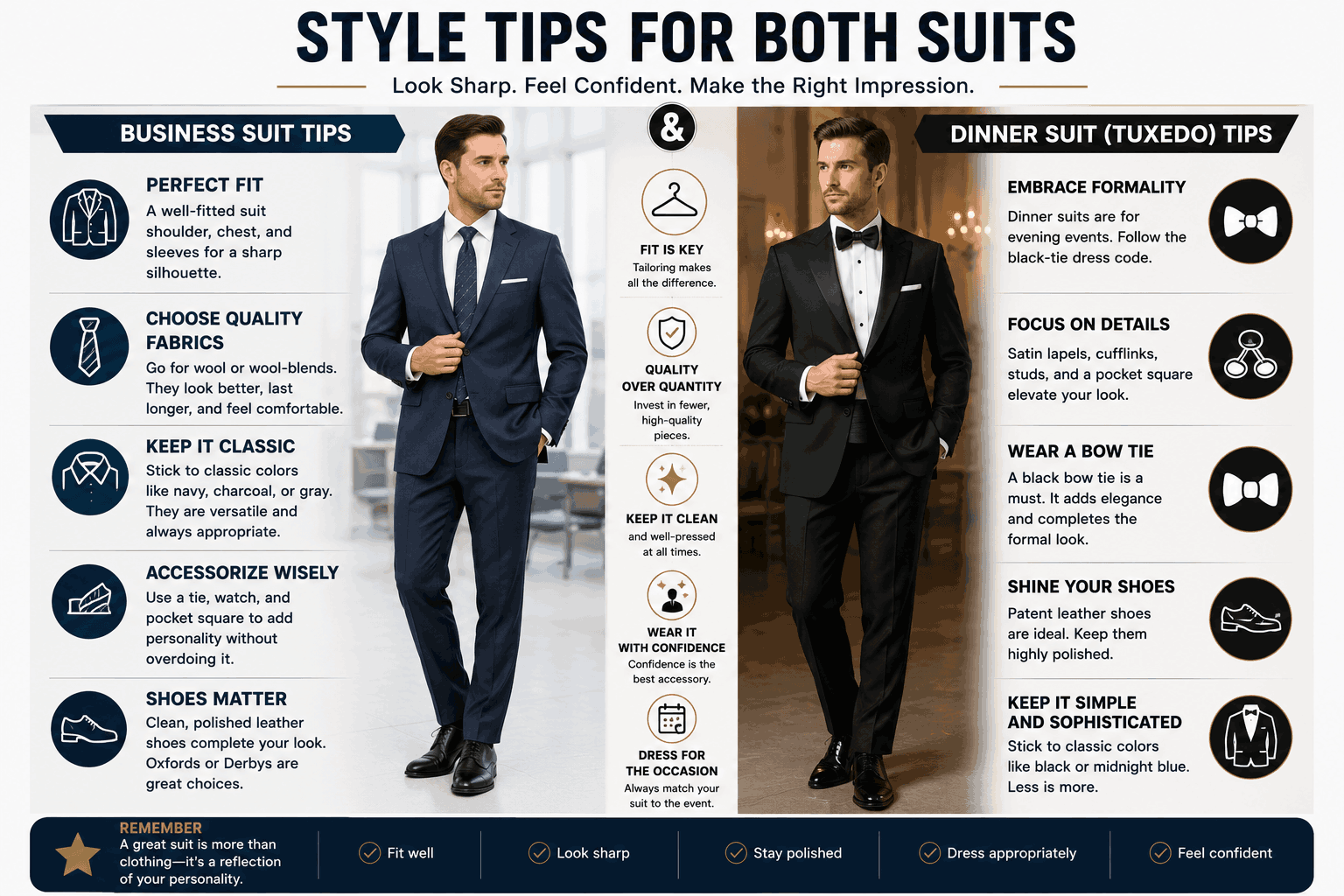
Business Suit Tips
- Choose navy for maximum versatility.
- Invest in quality leather shoes.
- Keep accessories minimal.
- Ensure trousers have the correct length.
Dinner Suit Tips
- Wear a self-tie bow tie when possible.
- Polish patent leather shoes.
- Keep jewelry understated.
- Maintain a crisp white shirt.
Frequently Asked Questions
Is a dinner suit the same as a tuxedo?
Yes. In the UK, it’s commonly called a dinner suit, while in the US it’s known as a tuxedo.
Can I wear a business suit to a black-tie event?
A standard business suit is generally not appropriate if the invitation specifies a black-tie dress code.
Why do dinner suits have satin lapels?
Satin lapels distinguish dinner suits from regular suits and add a refined, formal appearance.
Which is more expensive?
Dinner suits often cost more because of premium fabrics, satin detailing, and specialized tailoring. However, high-end business suits can also be expensive depending on the brand and material.
Can I wear a dinner suit during the day?
Traditionally, no. Dinner suits are intended for evening wear.
Is a black business suit the same as a dinner suit?
No. Even a black business suit lacks the satin lapels, satin trouser stripe, formal shirt, and accessories that define a dinner suit.
What color business suit is most versatile?
Navy blue is widely considered the most versatile option for professional and social settings.
Should I rent or buy a dinner suit?
If you attend formal events only occasionally, renting can be a cost-effective choice. If you regularly attend black-tie occasions, buying a well-tailored dinner suit is a worthwhile investment.
Conclusion
Understanding the difference between a dinner suit vs business suit helps you dress confidently and appropriately for every occasion. While a business suit is ideal for professional environments, meetings, and everyday formal wear, a dinner suit is designed for elegant evening events that require a black-tie dress code.
The key differences lie in their purpose, level of formality, fabric details, accessories, and styling. By choosing the right suit for the right event, you’ll not only follow proper etiquette but also present yourself with confidence and sophistication. Whether you’re preparing for an important boardroom presentation or a formal gala, investing in the appropriate suit ensures you always make the right impression.