
Introduction
Mobile Buying Guides: Buying a new smartphone has become more challenging than ever. With hundreds of models released every year, choosing the right device can feel overwhelming. Whether you’re upgrading from an older phone or buying your first smartphone, understanding what really matters can save you money and help you make a smarter purchase.
This comprehensive mobile buying guide explains everything you need to know before purchasing a smartphone in 2026. From processors and cameras to battery life and software updates, we’ll help you make an informed decision.
A good smartphone should match your needs and budget. Focus on processor performance, display quality, battery life, camera capabilities, software support, storage, and connectivity. Avoid paying extra for features you’ll rarely use, and always compare specifications, reviews, and long-term value before making a purchase.
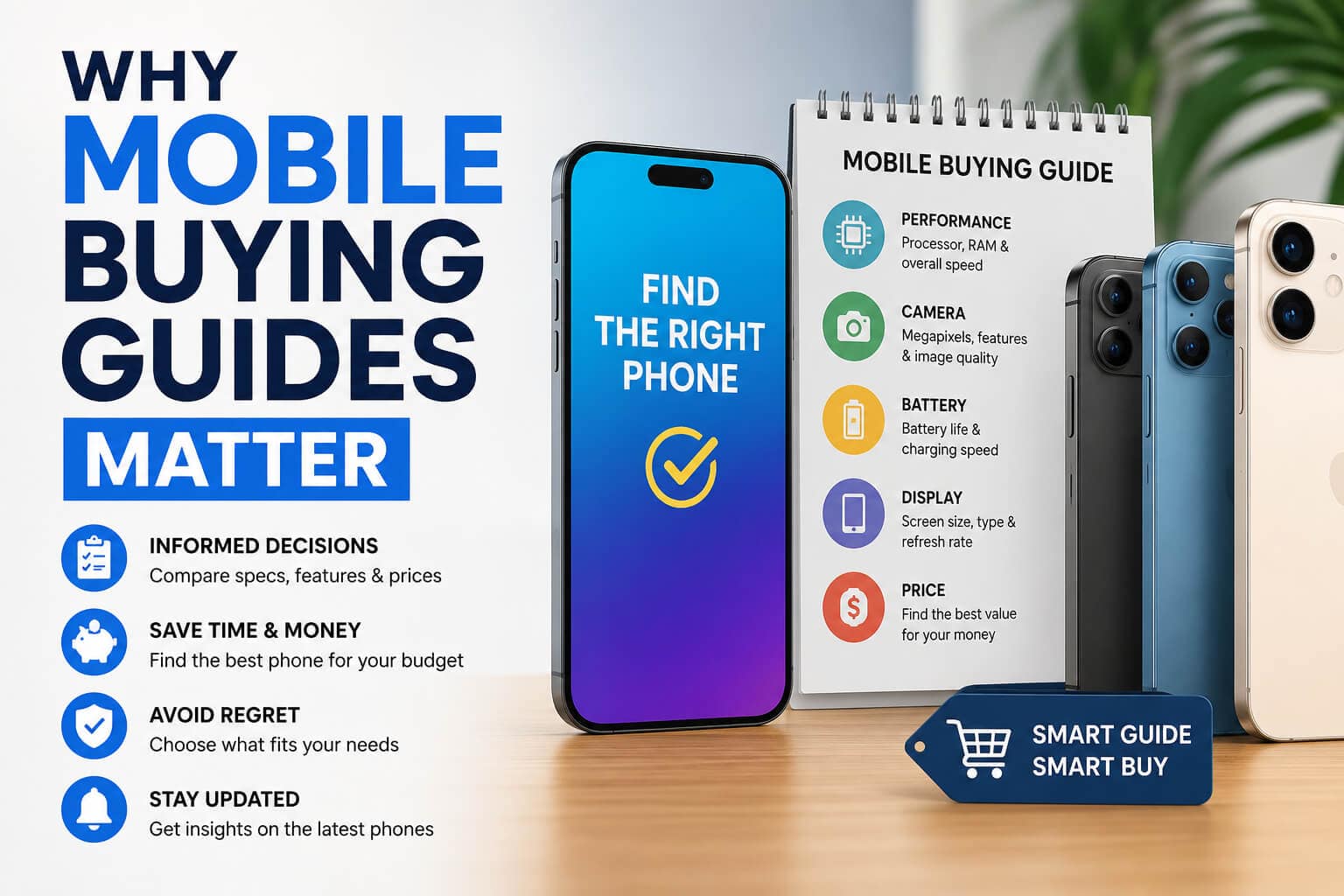
Why Mobile Buying Guides Matter
A smartphone is one of the most-used devices in daily life. It helps with communication, work, education, entertainment, photography, navigation, online banking, and much more.
A proper buying guide helps you:
- Avoid spending money on unnecessary features
- Compare different brands objectively
- Find the best value for your budget
- Understand technical specifications
- Buy a phone that lasts for years
- Avoid common buying mistakes
Instead of choosing a phone based on marketing, you can select one that truly fits your lifestyle.
Understanding Your Smartphone Needs
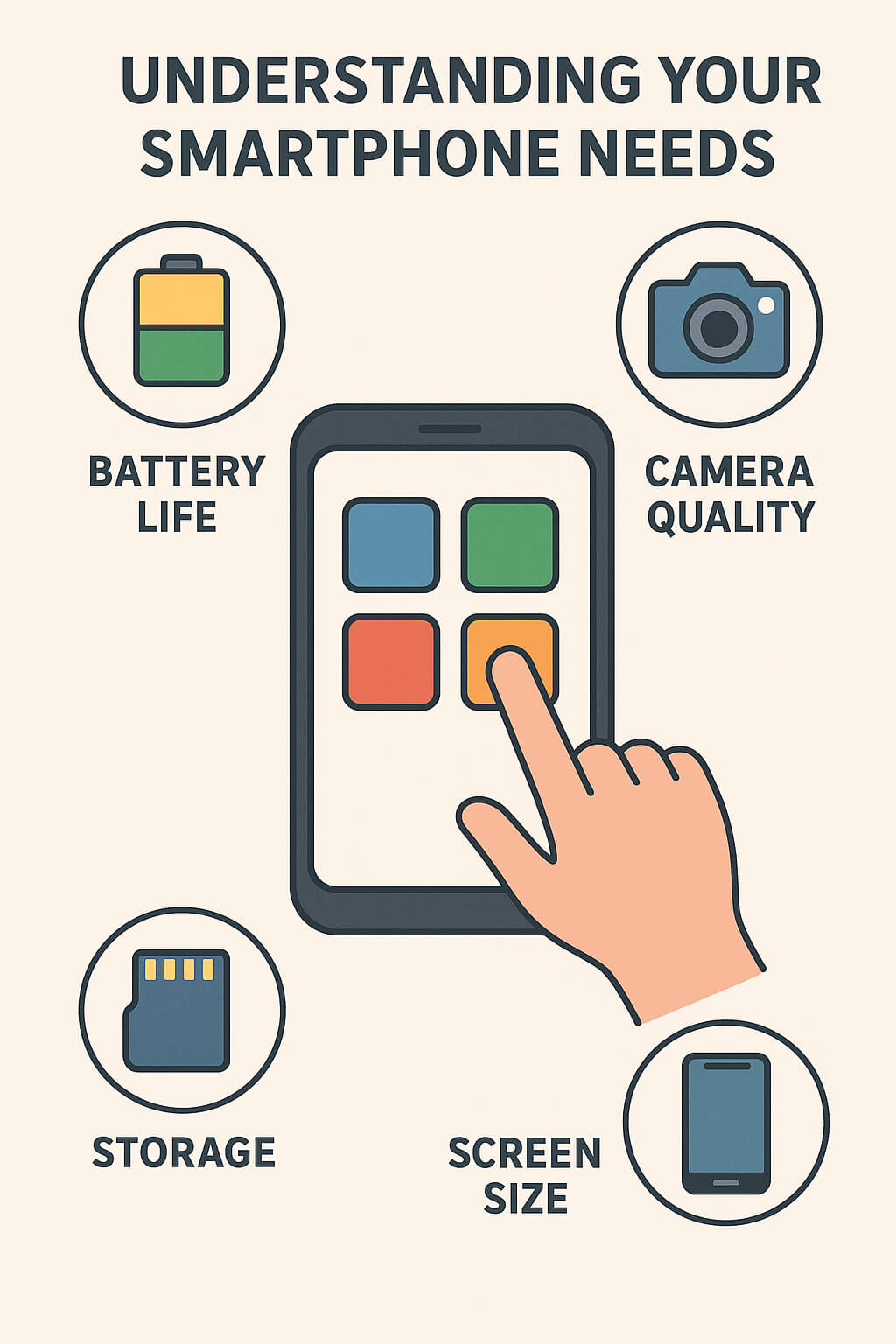
Before comparing specifications, ask yourself how you plan to use your phone.
For Everyday Users
If you mainly browse social media, watch videos, make calls, and use messaging apps, a mid-range smartphone is usually enough.
Look for:
- Smooth performance
- Full HD display
- Reliable battery
- Good main camera
- At least 128GB of storage
For Mobile Gamers
Gaming requires powerful hardware.
Important features include:
- Flagship processor
- High refresh-rate display
- Efficient cooling system
- Large battery
- Fast charging
- Stereo speakers
For Photography Enthusiasts
If photography matters most, prioritize camera quality instead of simply looking at megapixels.
Look for:
- Large image sensor
- Optical Image Stabilization (OIS)
- Good night photography
- Ultra-wide camera
- Telephoto lens
- 4K or 8K video recording
For Business Professionals
Productivity users benefit from:
- Strong security features
- Long software support
- Excellent battery life
- Reliable performance
- Fast charging
- Large display
Choosing the Right Budget
Setting a budget is the first step toward narrowing your options.
Budget Phones
Ideal for:
- Students
- Basic users
- Secondary phones
Typical features:
- LCD display
- Decent cameras
- Good battery
- Affordable price
Mid-Range Phones
The best value for most buyers.
You typically get:
- AMOLED displays
- Excellent cameras
- Fast processors
- 5G support
- Fast charging
- Premium design
Flagship Smartphones
Designed for users who want the latest technology.
Features often include:
- Premium build quality
- Best processors
- Advanced cameras
- Wireless charging
- AI-powered features
- Longer software support
Processor: The Brain of Your Smartphone
The processor determines how fast and efficient your phone feels.
Popular mobile chipsets include:
- Snapdragon series
- MediaTek Dimensity
- Apple A-series chips
- Google Tensor
- Samsung Exynos
A modern processor provides:
- Faster app launches
- Better gaming
- Improved battery efficiency
- Better AI performance
- Superior camera processing
RAM and Storage Explained
How Much RAM Do You Need?
4GB RAM
Suitable for:
- Basic usage
- Calls
- Messaging
- Browsing
6GB RAM
Perfect for average users.
8GB RAM
Ideal for:
- Gaming
- Heavy multitasking
- Content creation
12GB or More
Recommended for:
- Power users
- Professional creators
- Advanced multitasking
Storage Recommendations
Choose storage based on your usage.
128GB
Best for most people.
256GB
Ideal if you take lots of photos or videos.
512GB or More
Suitable for professionals and gamers.
Cloud storage can supplement local storage, but should not completely replace it.
Display Quality Matters
The display affects your overall experience more than many people realize.
Consider:
- AMOLED or OLED panels
- Full HD+ resolution
- High brightness
- 120Hz refresh rate
- HDR support
- Durable display protection
Larger displays are great for watching content, while smaller phones are easier to carry.
Camera Features Worth Considering
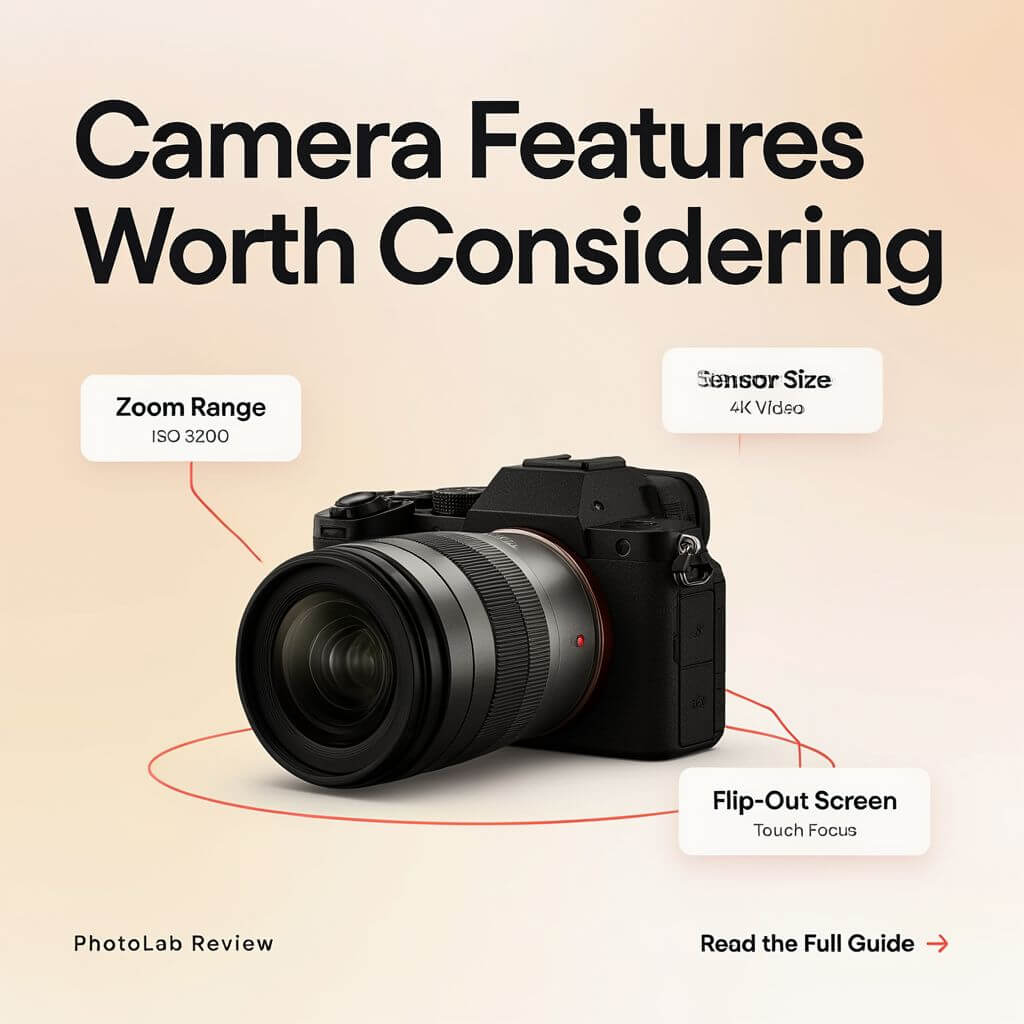
Many buyers focus only on megapixels, but image quality depends on much more.
Important camera factors include:
- Sensor size
- Lens quality
- Image processing
- Optical stabilization
- Night mode
- HDR
- Video stabilization
Additional lenses, like ultra-wide or telephoto, can add flexibility if you enjoy photography.
Battery Life and Charging
Battery performance is one of the biggest concerns for smartphone buyers.
A battery around 5,000mAh is common and usually provides all-day usage.
Also consider:
- Fast charging speed
- Wireless charging
- Reverse wireless charging
- Battery optimization
- Charging adapter compatibility
Efficient processors often improve battery life more than simply increasing battery capacity.
Software Experience
Software greatly affects long-term satisfaction.
A good smartphone should provide:
- Regular security updates
- Multiple Android version upgrades
- Clean user interface
- Useful AI features
- Minimal unnecessary apps
Long software support keeps your phone secure and usable for years.
Connectivity Features
Modern smartphones should support:
- 5G
- Wi-Fi 6 or newer
- Bluetooth 5.x
- NFC
- GPS
- USB-C
Premium devices may also include satellite communication or advanced wireless technologies.
Build Quality and Design
A durable phone lasts longer.
Look for:
- Gorilla Glass protection
- Aluminum or premium frame
- Water resistance
- Dust resistance
- Comfortable grip
- Quality buttons
A lightweight design improves daily usability.
Security Features
Protecting your personal information is essential.
Useful security options include:
- Fingerprint scanner
- Face unlock
- Secure hardware encryption
- Regular security patches
- Privacy dashboard
- App permission controls
Should You Buy Online or Offline?
Both options have advantages.
Buying Online
Benefits:
- Better discounts
- Easy comparison
- Customer reviews
- Frequent sales
- Home delivery
Buying Offline
Benefits:
- Hands-on experience
- Immediate purchase
- Physical inspection
- Personal assistance
- Easier warranty discussions
Many buyers compare phones in stores before purchasing online.
Common Smartphone Buying Mistakes
Avoid these common errors.
Buying Only for the Camera
A great camera won’t compensate for poor battery life or slow performance.
Ignoring Software Updates
Older software support reduces long-term value.
Purchasing More Power Than Needed
Not everyone needs the most expensive flagship.
Choose based on your actual needs.
Overlooking Battery Performance
Fast charging is useful, but battery endurance matters more.
Ignoring Reviews
Professional reviews and long-term user feedback often reveal issues that specifications don’t show.
Best Smartphone Features to Prioritize in 2026
When comparing phones, prioritize these features:
- Reliable processor
- Excellent battery life
- AMOLED display
- 120Hz refresh rate
- Fast charging
- Good cameras
- Long software support
- 5G connectivity
- Sufficient storage
- Durable build quality
These features provide the best long-term value.
Mobile Buying Tips for First-Time Buyers

If you’re purchasing your first smartphone:
- Set a realistic budget.
- Compare at least three models.
- Read trusted reviews.
- Watch camera samples.
- Check software update policies.
- Verify warranty coverage.
- Buy from authorized sellers.
- Consider future storage needs.
- Avoid buying solely based on advertisements.
- Focus on the overall experience rather than one specification.
Frequently Asked Questions
What should I check before buying a smartphone?
Check the processor, RAM, storage, display, battery, camera, software support, build quality, and price.
How much RAM is enough for everyday use?
For most users, 6GB to 8GB RAM provides a smooth experience for daily tasks and multitasking.
Is a 5,000mAh battery good?
Yes. A 5,000mAh battery generally offers all-day usage for most people, depending on screen brightness and usage habits.
Should I buy a flagship smartphone?
Only if you need premium performance, advanced cameras, or professional features. Mid-range phones offer excellent value for most users.
Which storage option is best?
128GB is sufficient for most users, while 256GB or more is better for gamers, photographers, and content creators.
Is 5G important in 2026?
Yes. If you plan to keep your phone for several years, choosing a 5G-ready device is a smart investment.
How long should a smartphone last?
With proper care and regular software updates, a quality smartphone can remain useful for four to six years.
Are online smartphone deals trustworthy?
Yes, provided you buy from authorized retailers and verify warranty coverage before purchasing.
Conclusion
Choosing the right smartphone isn’t about buying the most expensive model—it’s about finding the device that best matches your needs, lifestyle, and budget. By understanding key factors like performance, display, camera quality, battery life, software support, and long-term value, you can make a confident purchasing decision.
Use this mobile buying guide as a checklist whenever you compare phones. Taking a little extra time to research today can help you enjoy a better smartphone experience for years to come.