
Introduction
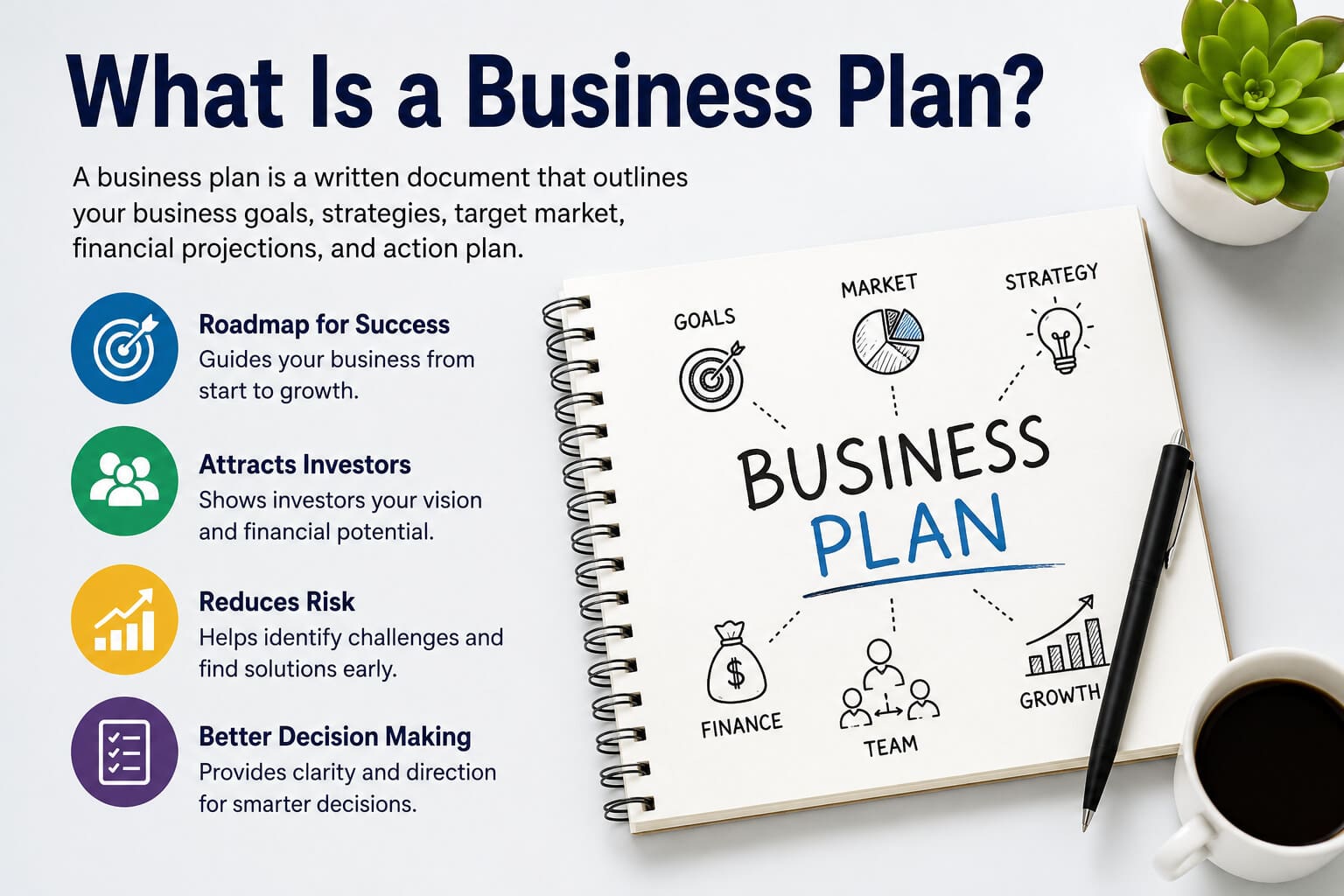
A business plan is a written document that outlines your business goals, target market, products or services, financial projections, and growth strategy. It serves as a roadmap for launching, managing, and expanding a business while helping secure funding and attract investors.
Starting a business is exciting, but turning an idea into a profitable company requires careful planning. Whether you’re launching a startup, expanding an existing company, or seeking funding from investors, a well-crafted business plan can make all the difference.
A business plan is much more than a document. It acts as a blueprint that helps entrepreneurs organize ideas, understand the market, estimate financial needs, and prepare for future challenges.
Many successful companies began with a clear business strategy written long before they opened their doors. A strong plan reduces uncertainty, improves decision-making, and increases the chances of long-term success.
In this guide, you’ll learn everything about business plans—from their purpose and structure to practical tips for writing one that stands out.
What Is a Business Plan?
A business plan is a formal document that explains how a business will operate and achieve its goals. It outlines important details about the company’s products, services, market, competition, marketing strategy, operations, and finances.
Think of it as a roadmap that guides every stage of your business journey.
A good business plan answers key questions such as:
- What problem does the business solve?
- Who are the target customers?
- How will the company generate revenue?
- What are the startup costs?
- How will the business grow?
- What makes the company different from its competitors?
Whether you’re opening a small local shop or building a global technology company, having a business plan helps keep your goals clear and measurable.
Why Is a Business Plan Important?
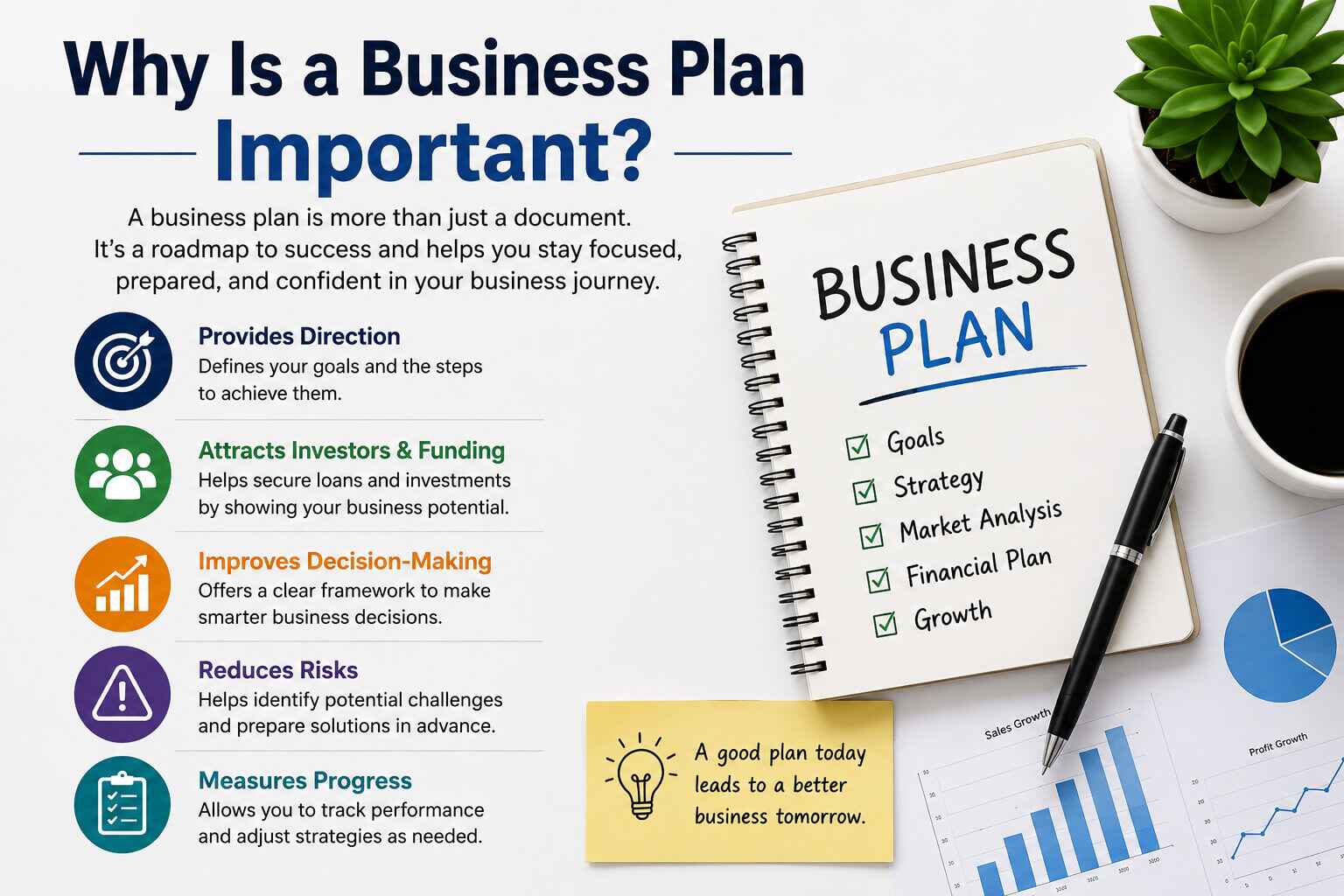
A business plan provides direction and helps business owners make informed decisions.
Its benefits include:
- Clarifies business objectives
- Identifies target customers
- Helps secure bank loans
- Attracts investors
- Reduces business risks
- Improves financial planning
- Guides daily operations
- Measures progress over time
- Supports business expansion
- Builds confidence among stakeholders
Without proper planning, businesses often struggle with budgeting, marketing, and growth.
Who Needs a Business Plan?
A business plan isn’t only for startups.
It can benefit:
- Entrepreneurs
- Small business owners
- Freelancers
- Online businesses
- E-commerce stores
- Restaurants
- Retail shops
- Manufacturers
- Consultants
- Non-profit organizations
Even established companies regularly update their business plans to reflect new opportunities and changing market conditions.
Types of Business Plans
Different situations require different kinds of business plans.
Traditional Business Plan
This is the most detailed format.
It includes:
- Executive summary
- Company description
- Market analysis
- Marketing strategy
- Financial projections
- Operations plan
Banks and investors usually prefer this format.
Lean Startup Business Plan
A lean business plan is shorter and focuses only on essential information.
It includes:
- Customer problem
- Proposed solution
- Revenue model
- Key resources
- Customer segments
- Competitive advantage
It works well for startups that need flexibility.
Internal Business Plan
Used only within the company to guide employees and management.
It focuses on:
- Business goals
- Performance metrics
- Internal strategies
- Growth planning
Strategic Business Plan
Designed for long-term planning.
It outlines:
- Mission
- Vision
- Long-term objectives
- Expansion plans
- Competitive strategy
Operational Business Plan
Focuses on day-to-day business operations.
It explains:
- Staffing
- Production
- Workflow
- Responsibilities
- Performance tracking
Key Components of a Business Plan
Every effective business plan should include several essential sections.
Executive Summary
This is the first section, but is usually written last.
It summarizes:
- Business idea
- Products or services
- Mission statement
- Financial highlights
- Future goals
Since it’s the first thing investors read, it should be concise and engaging.
Company Description
Explain your business in detail.
Include:
- Business name
- Legal structure
- Industry
- Business model
- History
- Objectives
Clearly describe what makes your company unique.
Market Analysis
Research is one of the most important parts of any business plan.
Include:
- Industry trends
- Target audience
- Customer demographics
- Market size
- Customer needs
- Competitor analysis
Use reliable market data whenever possible.
Products or Services
Describe what you’re selling.
Include:
- Features
- Benefits
- Pricing
- Product lifecycle
- Competitive advantages
- Future development plans
Focus on the value customers receive.
Marketing and Sales Strategy
Explain how you’ll attract customers.
Possible marketing channels include:
- SEO
- Social media
- Content marketing
- Email marketing
- Paid advertising
- Referral marketing
- Influencer partnerships
- Networking
Also, explain your sales process from lead generation to customer retention.
Organization and Management
Describe your team.
Include:
- Organizational structure
- Leadership team
- Employee roles
- Business ownership
- Advisors
Strong leadership increases investor confidence.
Operations Plan
Explain how the business operates daily.
Cover:
- Office location
- Equipment
- Inventory
- Suppliers
- Production process
- Logistics
- Customer support
Financial Plan
One of the most critical sections.
Include:
- Startup costs
- Revenue projections
- Cash flow forecast
- Profit and loss statement
- Break-even analysis
- Balance sheet
- Funding requirements
Accurate financial estimates improve credibility.
How to Write a Business Plan Step by Step
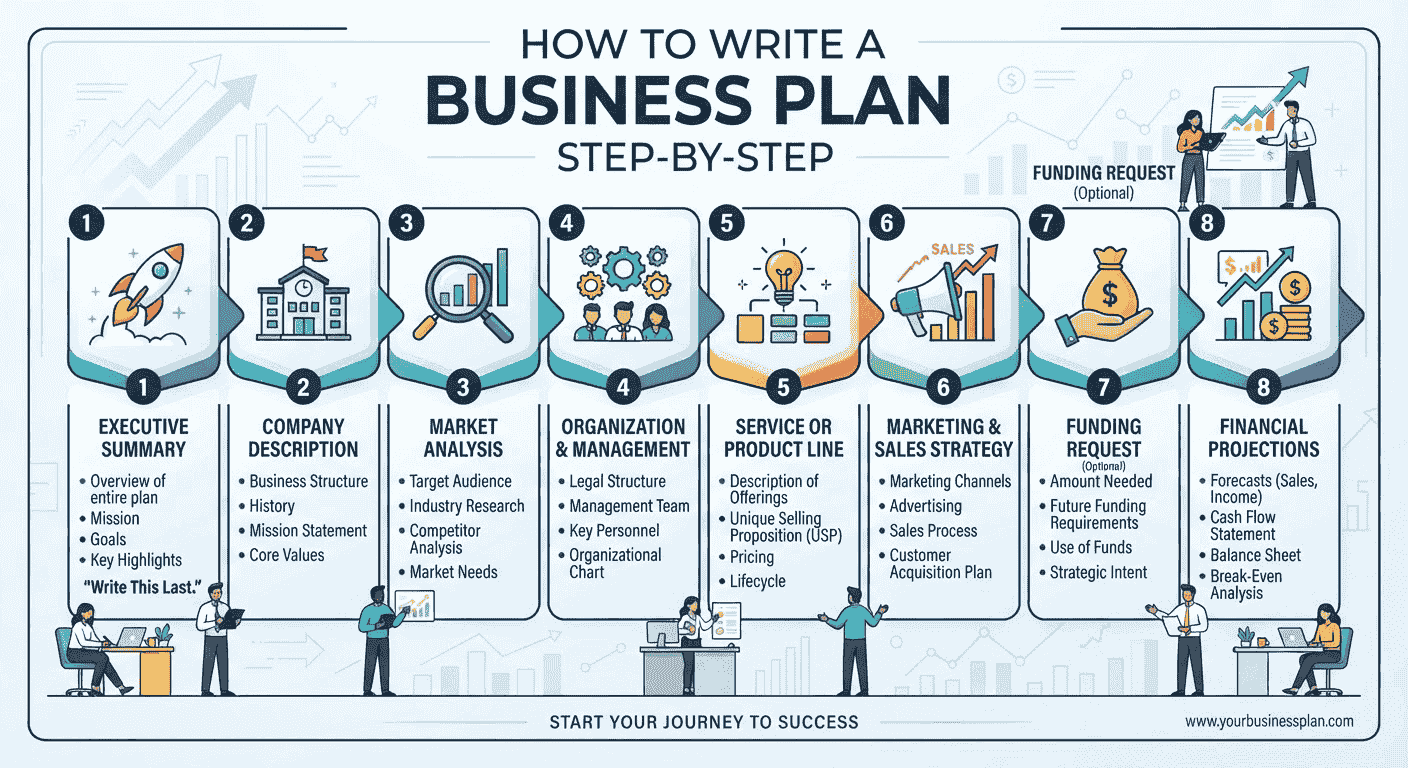
Creating a business plan becomes easier when broken into manageable steps.
Step 1: Define Your Business Idea
Start with a clear explanation of:
- What you’re offering
- Who your customers are
- Why your business matters
Step 2: Conduct Market Research
Study:
- Competitors
- Customer behavior
- Industry growth
- Pricing
- Market demand
Data-driven decisions reduce risk.
Step 3: Set Business Goals
Create SMART goals:
- Specific
- Measurable
- Achievable
- Relevant
- Time-bound
Example:
Increase monthly sales by 20% within the first year.
Step 4: Build Your Marketing Strategy
Identify:
- Target audience
- Marketing channels
- Budget
- Branding strategy
- Customer acquisition plan
Step 5: Prepare Financial Forecasts
Estimate:
- Revenue
- Expenses
- Profit margins
- Cash flow
- Investment needs
Use realistic assumptions rather than overly optimistic projections.
Step 6: Review and Update
A business plan should evolve.
Review it regularly to reflect:
- New goals
- Market changes
- Financial performance
- Business growth
Common Mistakes to Avoid
Many business plans fail because of avoidable errors.
Avoid:
- Unrealistic financial projections
- Poor market research
- Ignoring competitors
- Weak marketing strategy
- Lack of customer focus
- Incomplete risk analysis
- Too much unnecessary detail
- Poor formatting
- Outdated information
Keep your plan practical and evidence-based.
Business Plan Example Structure
A simple outline looks like this:
- Executive Summary
- Company Overview
- Market Analysis
- Products and Services
- Marketing Strategy
- Sales Plan
- Operations
- Management Team
- Financial Plan
- Funding Request
- Appendix
This structure works well for most businesses.
Tips for Writing a Winning Business Plan
To improve the quality of your plan:
- Keep the language clear and simple.
- Use real market research.
- Support claims with data.
- Include charts and financial tables when appropriate.
- Focus on customer needs.
- Explain your competitive advantage.
- Update the document regularly.
- Proofread carefully before sharing.
A polished business plan reflects professionalism.
Modern Tools for Creating a Business Plan
Today’s entrepreneurs have access to many planning tools.
Popular options include:
- Business plan templates
- Financial forecasting software
- AI writing assistants
- Accounting software
- Market research platforms
- CRM systems
- Project management tools
These resources can save time while improving accuracy.
How Often Should You Update a Business Plan?
A business plan should be reviewed at least once a year.
You should also update it when:
- Launching a new product
- Entering a new market
- Hiring employees
- Seeking investment
- Experiencing major growth
- Changing business strategy
Regular updates keep the plan aligned with current goals.
Benefits of Having a Strong Business Plan

Businesses with solid planning often experience:
- Better financial management
- Improved decision-making
- Faster growth
- Easier fundraising
- Stronger customer focus
- Better team alignment
- Reduced operational risks
- Greater investor confidence
Planning increases the likelihood of long-term success.
Frequently Asked Questions (FAQs)
What is the main purpose of a business plan?
A business plan provides a roadmap for achieving business goals while helping attract investors, secure funding, and guide decision-making.
How long should a business plan be?
Most business plans range from 15 to 40 pages, depending on the size and complexity of the business.
Do small businesses need a business plan?
Yes. Even small businesses benefit from planning because it helps manage finances, marketing, and growth.
Can I write a business plan without business experience?
Absolutely. With proper research and a structured approach, first-time entrepreneurs can create an effective business plan.
How often should I update my business plan?
Review it annually or whenever your business experiences significant changes, such as launching new products or entering new markets.
What is the difference between a business plan and a business model?
A business model explains how a company creates and earns value, while a business plan provides a comprehensive roadmap covering operations, marketing, finances, and growth.
Is a business plan required to get funding?
In most cases, yes. Banks, investors, and many grant providers expect a detailed business plan before approving funding.
What financial information should a business plan include?
It should include startup costs, revenue forecasts, profit and loss projections, cash flow statements, break-even analysis, and funding requirements.
Conclusion
A business plan is one of the most valuable tools for any entrepreneur. It transforms ideas into actionable strategies, helps secure funding, improves decision-making, and prepares businesses for future growth.
Whether you’re launching your first startup, growing a small business, or seeking investment, taking the time to create a thoughtful and realistic business plan can significantly improve your chances of success. Review it regularly, adapt it as your business evolves, and use it as a living guide to achieve your long-term goals.