
Introduction
Choosing the best phone for students is about more than finding the latest model. A good student smartphone should be reliable, affordable, and capable of handling schoolwork, communication, and entertainment. Whether you’re attending online classes, taking notes, researching assignments, or staying connected with classmates, the right phone can make student life much easier.
Today, many budget and mid-range smartphones offer premium features without a premium price. Understanding what matters most can help students and parents make a smarter buying decision.
Why Students Need a Reliable Smartphone
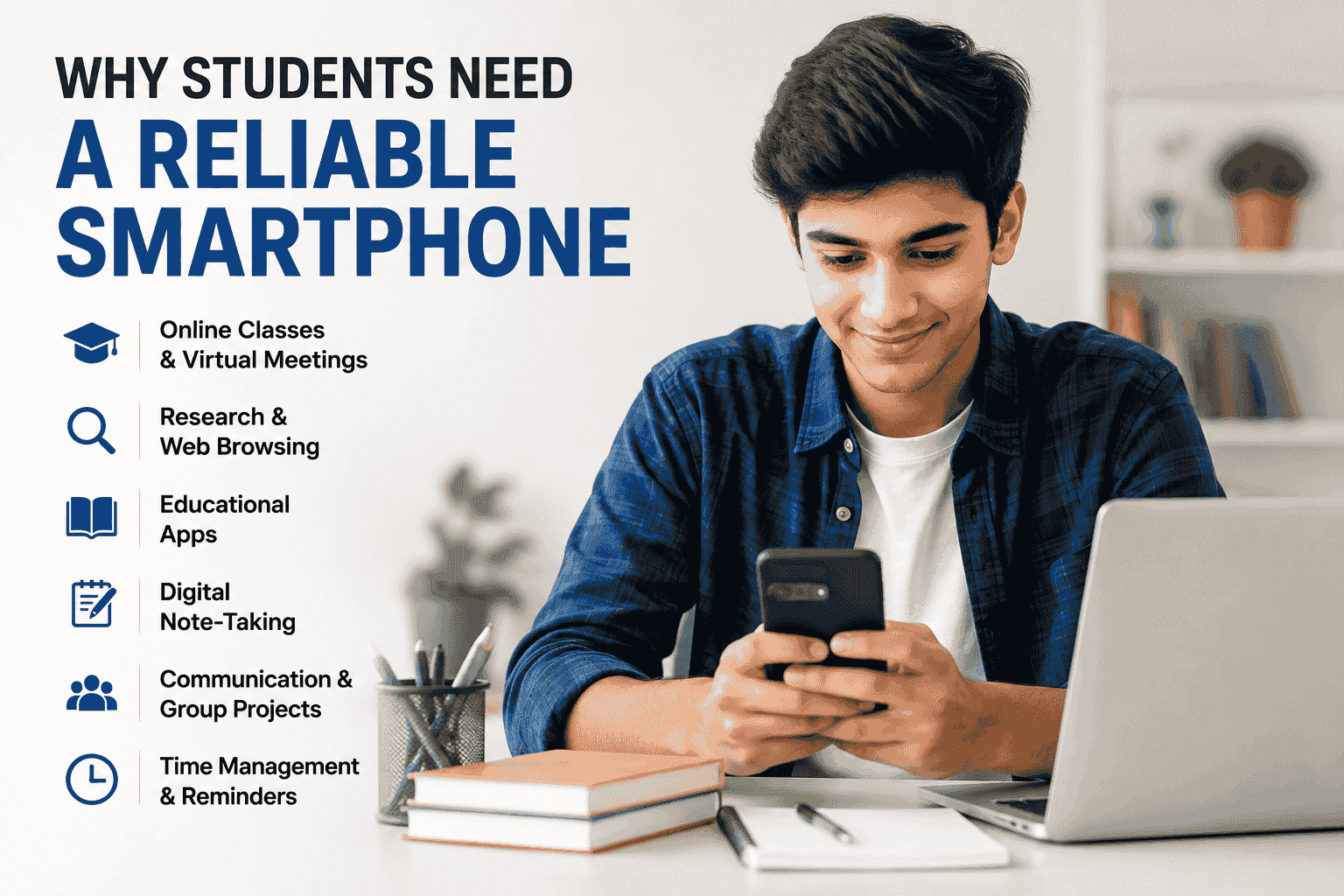
A smartphone has become an essential learning tool. Students use their phones for much more than calls and social media.
Common uses include:
- Online classes and virtual meetings
- Research and web browsing
- Educational apps
- Digital note-taking
- Reading eBooks and PDFs
- Group projects and communication
- Time management and reminders
A reliable phone helps students stay productive while reducing frustration caused by slow performance or poor battery life.
Features to Look for in the Best Phone for Students
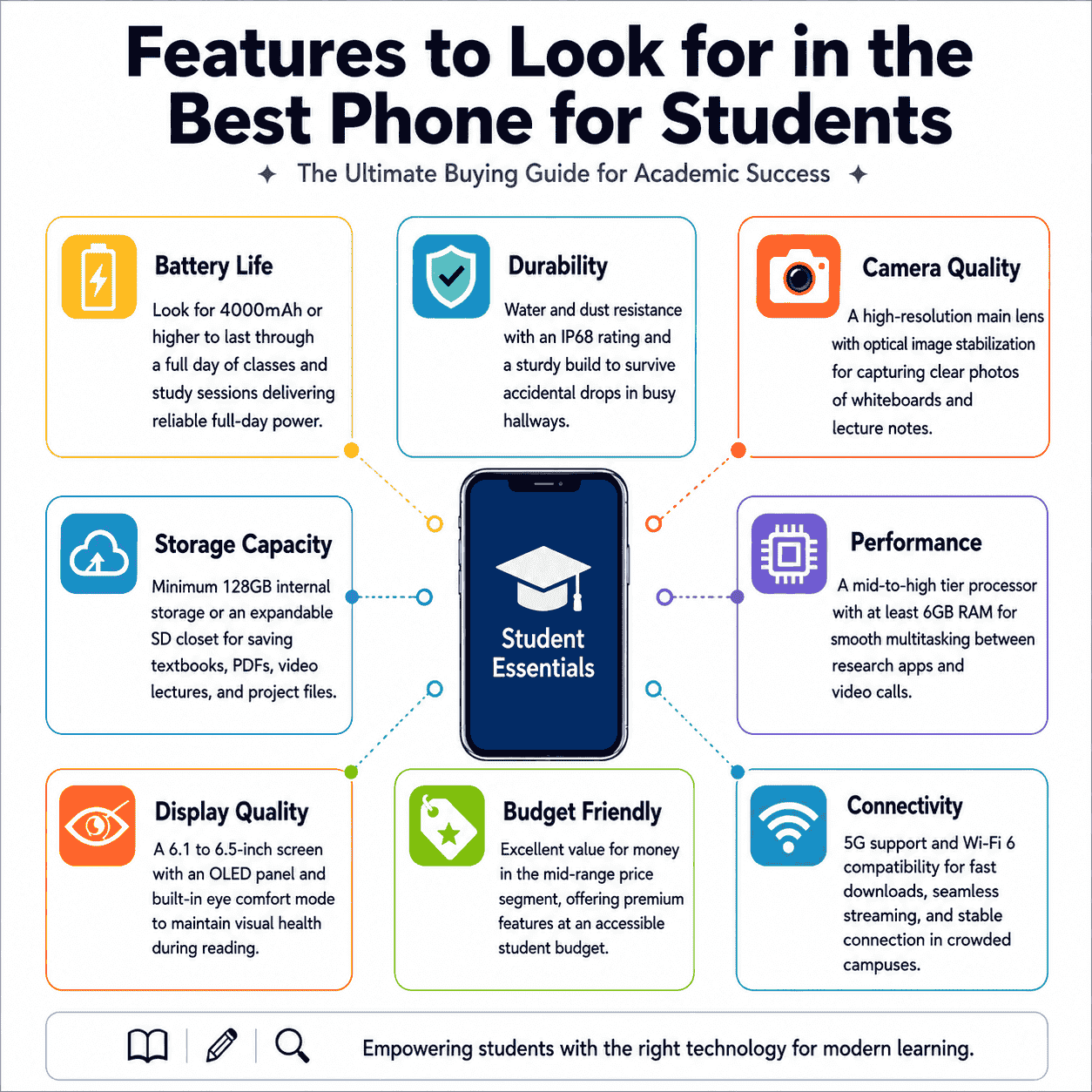
Before buying a smartphone, it’s important to understand which features offer the greatest value.
Battery Life
Students spend long hours at school, college, or university. A phone with all-day battery life reduces the need to carry a charger everywhere.
Look for:
- 5,000mAh battery or larger
- Fast charging support
- Battery optimization software
Performance
A smooth experience matters when switching between educational apps, browsers, and messaging platforms.
Choose a phone with:
- Modern multi-core processor
- At least 6GB RAM
- Fast internal storage
Better performance also helps when editing documents or attending video classes.
Display Quality
Reading notes and watching lectures becomes more comfortable on a quality display.
A good student phone should have:
- Full HD resolution
- Bright screen
- Eye comfort mode
- Large display for multitasking
Storage Capacity
Students often store presentations, assignments, photos, videos, and apps.
Recommended storage:
- Minimum 128GB
- Expandable storage if available
- Cloud backup support
Camera
Students frequently scan documents, capture classroom notes, or join video calls.
A good camera should provide:
- Sharp daylight photos
- Clear front camera
- Good video quality
- Document scanning capability
Best Types of Phones for Students
Different students have different needs and budgets.
Budget Smartphones
Ideal for school students and first-time buyers.
Benefits include:
- Affordable pricing
- Long battery life
- Good everyday performance
- Basic cameras
These phones handle messaging, studying, browsing, and streaming comfortably.
Mid-Range Smartphones
Perfect for college and university students.
Advantages include:
- Faster processors
- Better cameras
- Premium displays
- Improved multitasking
- Longer software support
They offer excellent value for money.
Premium Smartphones
Some students prefer flagship devices for advanced features.
Premium phones provide:
- Powerful performance
- Excellent cameras
- High refresh rate displays
- Better security
- Longer software updates
These are suitable for students studying photography, media, design, or content creation.
Android or iPhone for Students?
Both platforms have advantages.
Android
Pros:
- More affordable options
- Greater variety of brands
- Customization
- Expandable storage on some models
Best for students looking for value.
iPhone
Pros:
- Excellent performance
- Long software support
- Strong security
- Smooth ecosystem
- Great educational apps
Best for students already using Apple devices.
Important Apps Every Student Should Use
The best phone becomes even more useful with the right apps.
Popular categories include:
- Note-taking apps
- Cloud storage
- Calendar and scheduling
- Document editors
- Video conferencing
- Calculator apps
- Language learning
- Productivity tools
These apps help students stay organized throughout the academic year.
Tips for Choosing the Best Phone for Students
Buying the right smartphone becomes easier with a few practical tips.
Set a Budget
Avoid overspending on features that won’t be used regularly.
Focus on Battery Life
Long battery life is often more valuable than extra camera lenses.
Buy Enough Storage
Running out of storage can affect performance and productivity.
Consider Software Updates
Phones with longer update support stay secure and useful for more years.
Read Real User Reviews
Customer experiences often reveal long-term strengths and weaknesses that specifications alone cannot show.
Common Mistakes to Avoid
Students sometimes make purchasing decisions based only on appearance.
Avoid these mistakes:
- Buying only for camera quality
- Ignoring battery performance
- Choosing too little storage
- Paying extra for unnecessary premium features
- Ignoring software update policies
A balanced smartphone usually provides the best overall experience.
How the Right Phone Improves Student Productivity
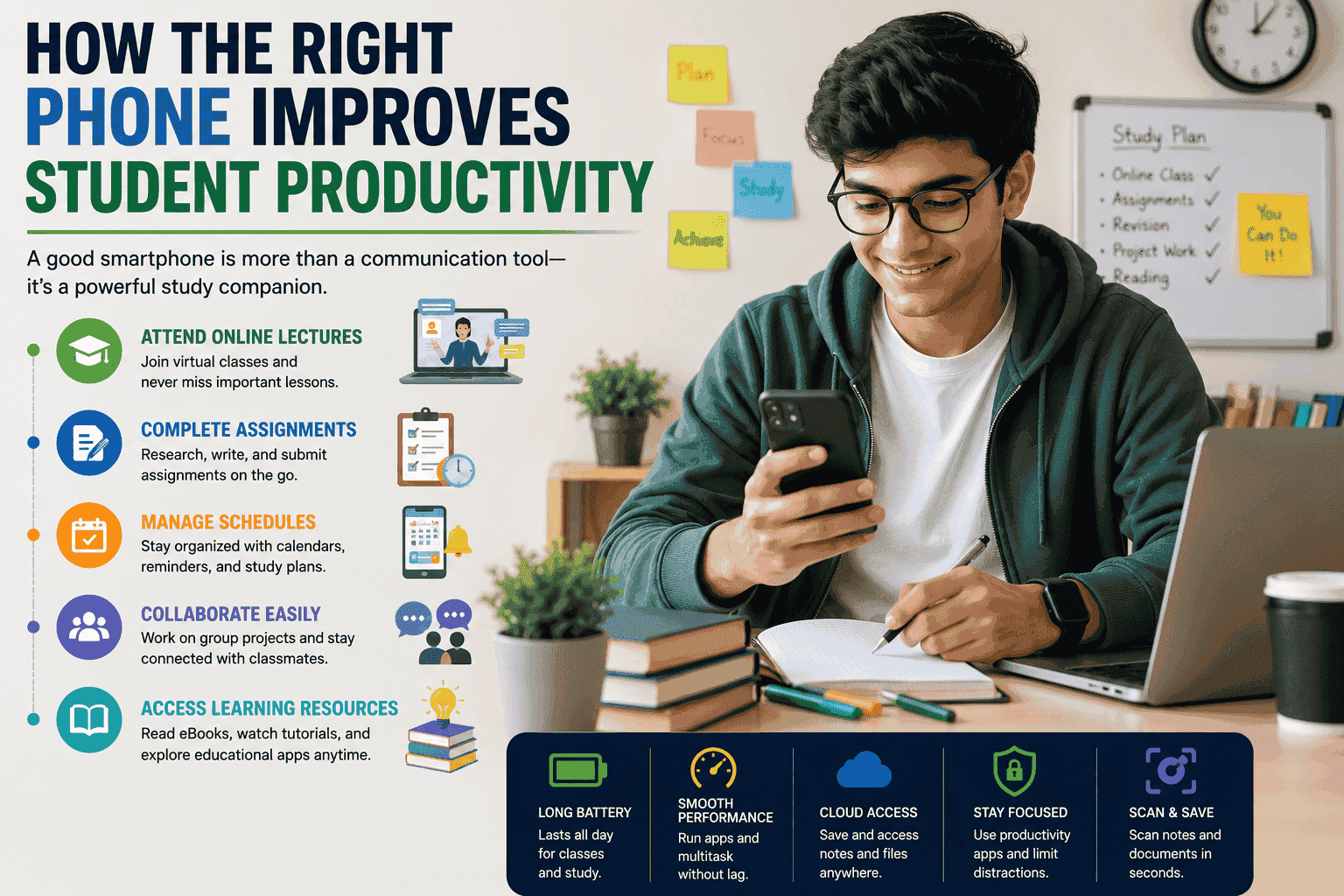
A well-chosen smartphone supports learning in many ways.
Students can:
- Attend online lectures
- Complete assignments
- Manage schedules
- Collaborate with classmates
- Access educational resources anywhere
- Stay connected with teachers
Instead of becoming a distraction, the right phone can become a valuable study companion.
FAQs
What is the best phone for students?
The best phone for students combines affordability, strong battery life, reliable performance, sufficient storage, and regular software updates.
How much RAM should a student phone have?
At least 6GB RAM is recommended for smooth multitasking and educational apps, while 8GB offers even better performance.
Is 128GB storage enough for students?
Yes. For most students, 128GB provides enough space for apps, documents, photos, videos, and coursework.
Should students choose Android or iPhone?
Android is generally better for budget-conscious buyers, while iPhone offers longer software support and excellent performance.
Does battery life matter more than camera quality?
For most students, yes. Long battery life is more useful during classes, study sessions, and travel than having advanced camera features.
Are budget phones good for studying?
Yes. Modern budget smartphones can easily handle note-taking, online classes, educational apps, web browsing, and communication.
Which display size is best for students?
Displays between 6.4 and 6.7 inches provide a comfortable balance for reading, studying, and watching educational content.
How often should students upgrade their phone?
A quality smartphone can comfortably last four to five years with proper care and regular software updates.
Conclusion
Finding the best phone for students doesn’t mean buying the most expensive device. The ideal smartphone offers dependable performance, long battery life, enough storage, and a comfortable display while staying within budget. By focusing on everyday usability instead of unnecessary premium features, students can choose a phone that supports learning, productivity, and communication throughout their academic journey. Whether you’re in high school, college, or university, selecting the right smartphone is an investment that can improve both your studies and your daily routine.