
Introduction
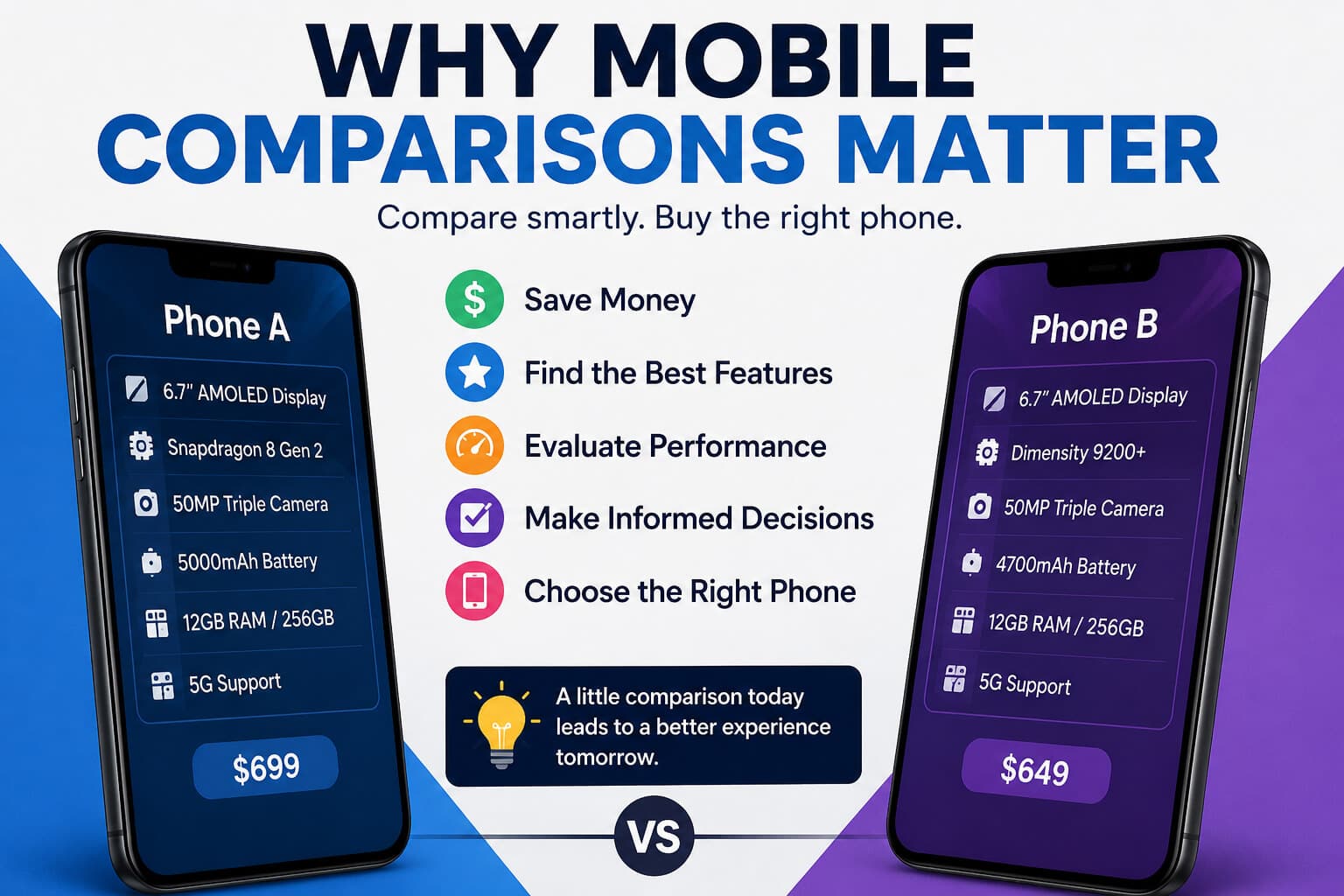
Smartphones have become an essential part of daily life, making it more important than ever to choose the right device. With hundreds of new models released every year, finding the perfect phone can be overwhelming. This is where mobile comparisons become incredibly useful.
Comparing smartphones helps buyers understand the differences in features, performance, design, cameras, battery life, and pricing before making a purchase. Instead of relying solely on advertisements, a detailed comparison allows you to make an informed decision based on your needs and budget.
Whether you’re looking for a flagship phone, a gaming device, or a budget-friendly smartphone, this guide covers everything you need to know about mobile comparisons.
Why Mobile Comparisons Matter
Not every smartphone is designed for the same type of user. Some prioritize photography, while others focus on gaming performance, battery life, or affordability.
A proper comparison helps you:
- Save money
- Avoid buying unnecessary features
- Find the best value for your budget
- Compare specifications side by side
- Understand real-world performance
- Choose a phone that matches your lifestyle
Instead of purchasing the newest phone, comparing multiple devices often reveals better alternatives.
What Should You Compare in a Smartphone?
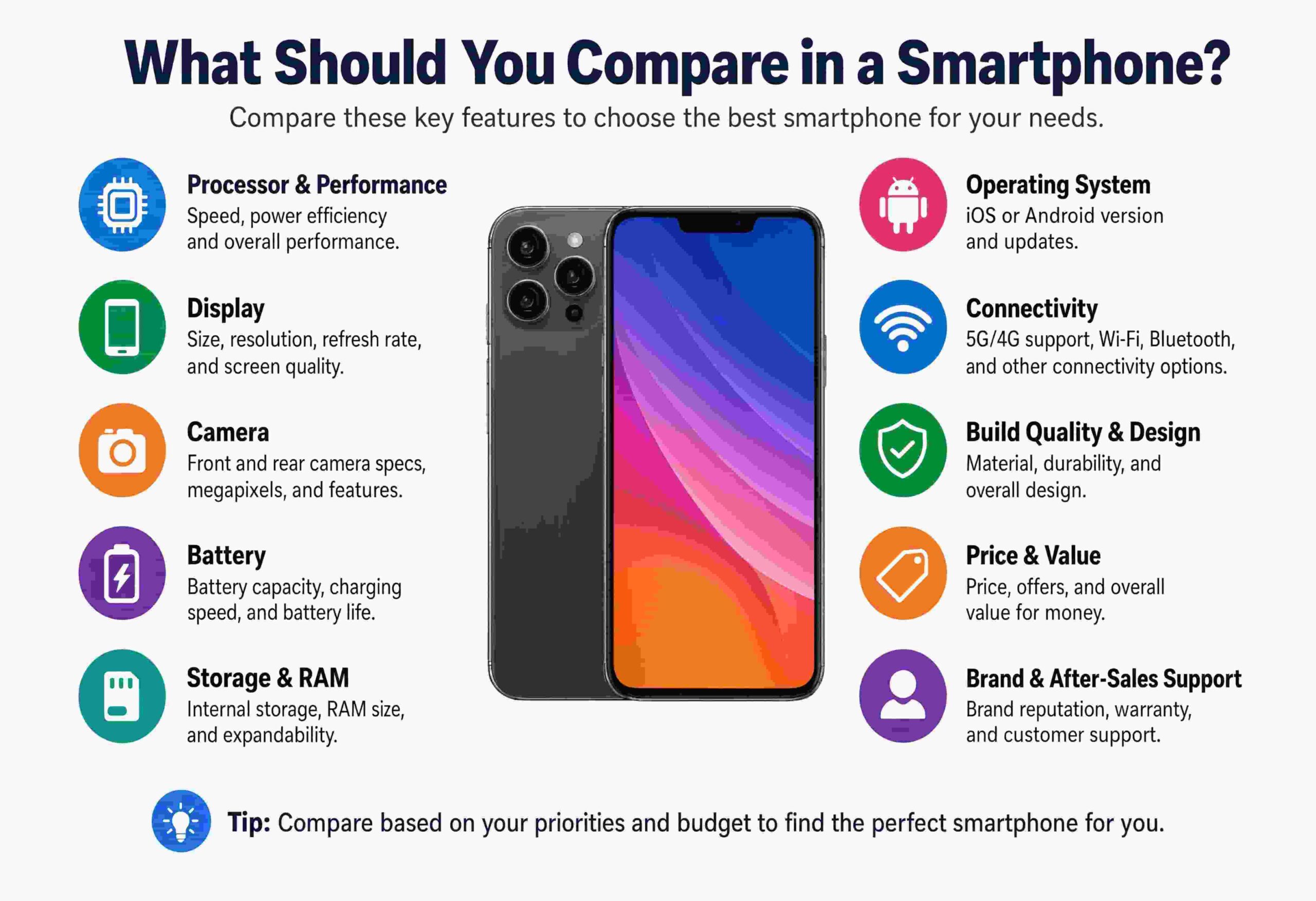
There are several important factors to consider before buying a new phone.
Display Quality
The display is one of the most noticeable parts of a smartphone.
Things to compare include:
- Screen size
- AMOLED vs LCD
- Resolution
- Brightness
- HDR support
- Refresh rate (60Hz, 90Hz, 120Hz, or higher)
A higher refresh rate creates smoother scrolling and better gaming performance.
Processor Performance
The processor is the heart of every smartphone.
Popular mobile chipsets include:
- Snapdragon series
- Apple A-series chips
- MediaTek Dimensity processors
- Google Tensor chips
- Samsung Exynos processors
A powerful processor ensures:
- Faster app loading
- Better gaming
- Improved multitasking
- Longer software support
Camera Comparison
For many buyers, the camera is the deciding factor.
Compare:
- Main camera resolution
- Sensor size
- Ultra-wide camera
- Telephoto zoom
- Optical Image Stabilization (OIS)
- Video recording quality
- Night photography
- AI image processing
Remember that megapixels alone don’t determine image quality. Software optimization plays a huge role.
Battery Life
Battery performance depends on both hardware and software optimization.
Look at:
- Battery capacity
- Charging speed
- Wireless charging
- Reverse wireless charging
- Screen-on time
- Battery optimization
Some phones with smaller batteries actually last longer because of efficient processors.
RAM and Storage
RAM affects multitasking, while storage determines how many apps, photos, and videos you can keep.
Common options include:
- 6GB RAM
- 8GB RAM
- 12GB RAM
- 16GB RAM
Storage choices:
- 128GB
- 256GB
- 512GB
- 1TB
If you record lots of videos, higher storage is recommended.
Software Experience
Operating system updates are often overlooked.
Compare:
- Android version
- iOS version
- Security updates
- Years of software support
- User interface
- Built-in features
Longer software support means your phone stays secure and useful for years.
Mobile Comparisons by Price
Budget Smartphones
Ideal for:
- Students
- Basic users
- Social media
- Calling and messaging
Usually offer:
- Good battery life
- Decent cameras
- Affordable prices
Mid-Range Smartphones
These provide the best balance between price and features.
Expect:
- AMOLED displays
- Multiple cameras
- Fast charging
- Better processors
- Premium designs
Mid-range phones often offer the highest value for money.
Flagship Smartphones
Premium phones include the latest technology.
Features often include:
- Top-tier processors
- Excellent cameras
- Wireless charging
- Water resistance
- Premium materials
- AI-powered features
They are ideal for professionals, photographers, and power users.
Android vs iPhone Comparison
Android Phones
Advantages:
- More brands
- Wider price range
- Better customization
- Expandable storage on some models
- Fast charging options
Disadvantages:
- Different update policies
- Varying software quality
iPhones
Advantages:
- Excellent optimization
- Long software support
- Strong ecosystem
- Great video recording
- High resale value
Disadvantages:
- Higher prices
- Less customization
- Limited hardware options
Mobile Comparisons for Gaming
Gamers should compare:
- Processor
- GPU
- Cooling system
- Refresh rate
- Touch sampling rate
- Battery size
- Charging speed
Gaming phones often include advanced cooling technology for longer sessions.
Mobile Comparisons for Photography
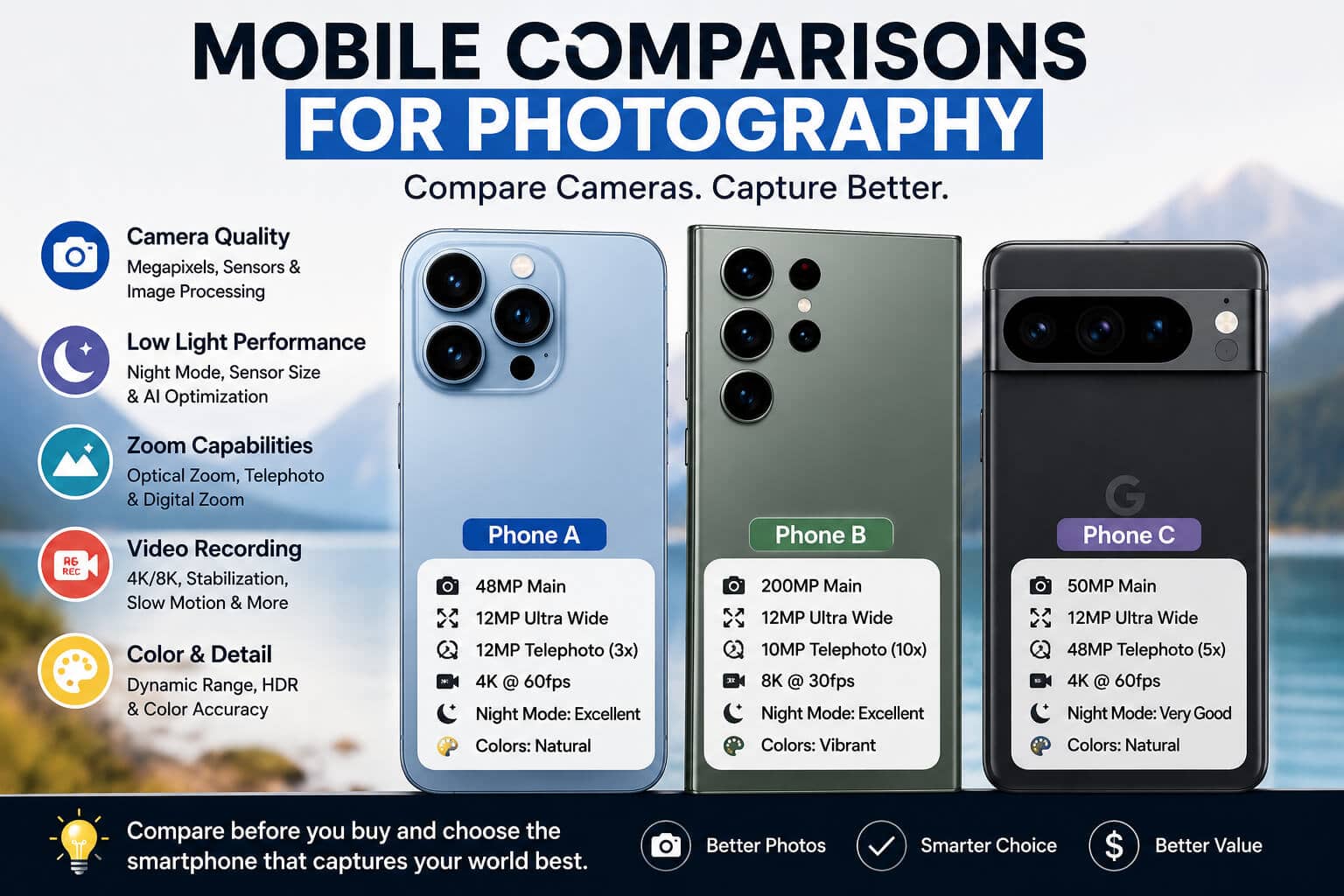
Photography enthusiasts should focus on:
Daylight Photography
Look for:
- Dynamic range
- Color accuracy
- Sharpness
Night Photography
Compare:
- Low-light performance
- Night mode
- Sensor size
- Image stabilization
Video Recording
Important features:
- 4K recording
- 8K recording
- Stabilization
- HDR video
- Slow motion
Camera Megapixels vs Real Quality
Many buyers assume more megapixels mean better photos.
In reality, image quality depends on:
- Sensor size
- Lens quality
- AI processing
- HDR performance
- Software optimization
A 50MP camera can easily outperform a 108MP camera if the sensor and software are superior.
Battery Comparison: Fast Charging vs Battery Size
A larger battery doesn’t always mean better endurance.
Compare:
- Charging speed
- Battery efficiency
- Display power consumption
- Processor efficiency
Some flagship phones charge from 0–100% in under 30 minutes.
Display Comparison
Today’s smartphones offer different display technologies.
LCD
Pros:
- Lower cost
- Good brightness
Cons:
- Lower contrast
- Less vibrant colors
AMOLED
Pros:
- Deep blacks
- Better contrast
- Lower power consumption
- More vibrant colors
Cons:
- Higher cost
Build Quality
Compare materials:
- Plastic
- Aluminum
- Glass
- Titanium
Premium materials improve durability and appearance.
Water and Dust Resistance
Many modern smartphones offer protection through IP ratings.
Examples include:
- IP53
- IP67
- IP68
Higher ratings provide better resistance against dust and water.
Connectivity Features
Modern smartphones should support:
- 5G
- Wi-Fi 6
- Wi-Fi 7
- Bluetooth 5.4
- NFC
- USB Type-C
- eSIM
Future-ready connectivity increases the lifespan of your device.
How to Read Mobile Comparison Charts
When comparing phones, don’t focus on one specification.
Instead, evaluate:
- Overall performance
- Software support
- Camera consistency
- Battery life
- Display quality
- Value for money
A balanced smartphone often delivers a better experience than one with impressive numbers on paper.
Common Mistakes During Mobile Comparisons
Avoid these mistakes:
- Buying based only on megapixels
- Ignoring software updates
- Choosing unnecessary storage
- Overlooking battery optimization
- Forgetting repair costs
- Ignoring warranty coverage
- Following marketing claims without research
Tips for Choosing the Right Smartphone
Before buying:
- Set your budget.
- Compare at least three phones.
- Read professional reviews.
- Watch camera comparisons.
- Check software update policies.
- Consider long-term value.
- Buy according to your needs rather than trends.
Future of Mobile Comparisons
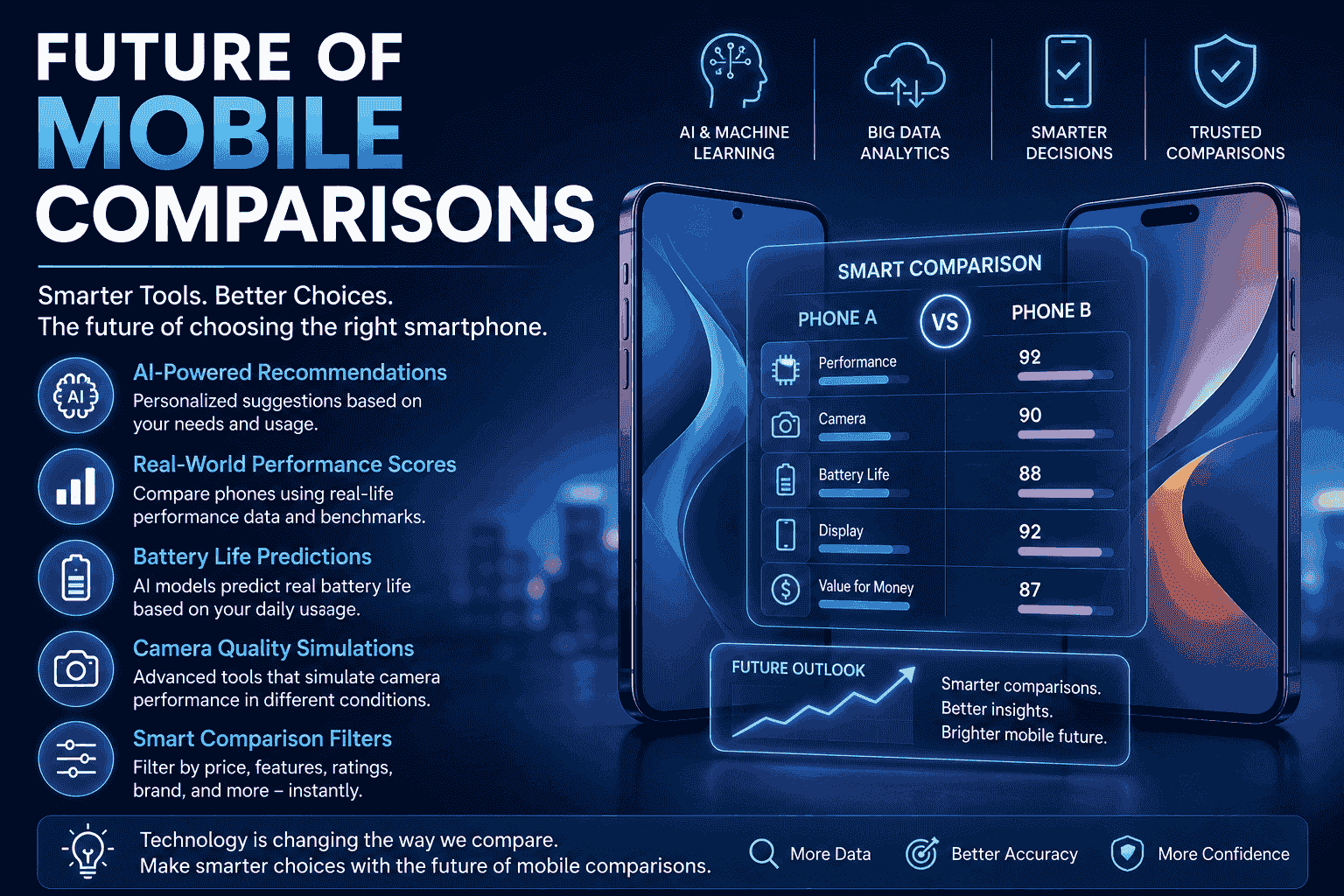
Smartphone comparisons are becoming smarter thanks to artificial intelligence.
Future comparison tools may include:
- AI buying recommendations
- Real-world performance scores
- Battery health predictions
- Camera quality simulations
- Personalized comparison filters
These advancements will make choosing the right smartphone easier than ever.
Frequently Asked Questions (FAQs)
What are mobile comparisons?
Mobile comparisons evaluate smartphones side by side based on specifications, features, performance, cameras, battery life, and pricing to help buyers make informed decisions.
Which feature is most important when comparing phones?
The answer depends on your needs. Camera quality, processor performance, battery life, display, software support, and price are all important factors.
Is a higher megapixel camera always better?
No. Image quality depends on the sensor, lens, and software processing, not just the megapixel count.
Should I compare benchmark scores?
Benchmark scores help measure performance, but they should be considered alongside real-world usage and software optimization.
Are flagship phones always worth the price?
Flagship phones offer premium features and longer software support, but many mid-range smartphones provide excellent value for everyday users.
How many years of software updates should I expect?
Many leading smartphone brands now provide between four and seven years of software and security updates for flagship models, while mid-range devices may receive fewer years.
Is battery capacity the only indicator of battery life?
No. Battery efficiency depends on the processor, display technology, software optimization, and usage habits in addition to battery size.
Conclusion
Mobile comparisons are one of the smartest ways to choose a new smartphone. Instead of relying on advertisements or brand loyalty, comparing devices side by side helps you evaluate performance, camera quality, battery life, display, software support, and overall value. By understanding the strengths and weaknesses of each phone, you can confidently select a device that fits your budget and daily needs. Whether you’re shopping for a budget model, a gaming phone, or a premium flagship, informed comparisons lead to better buying decisions and greater long-term satisfaction.